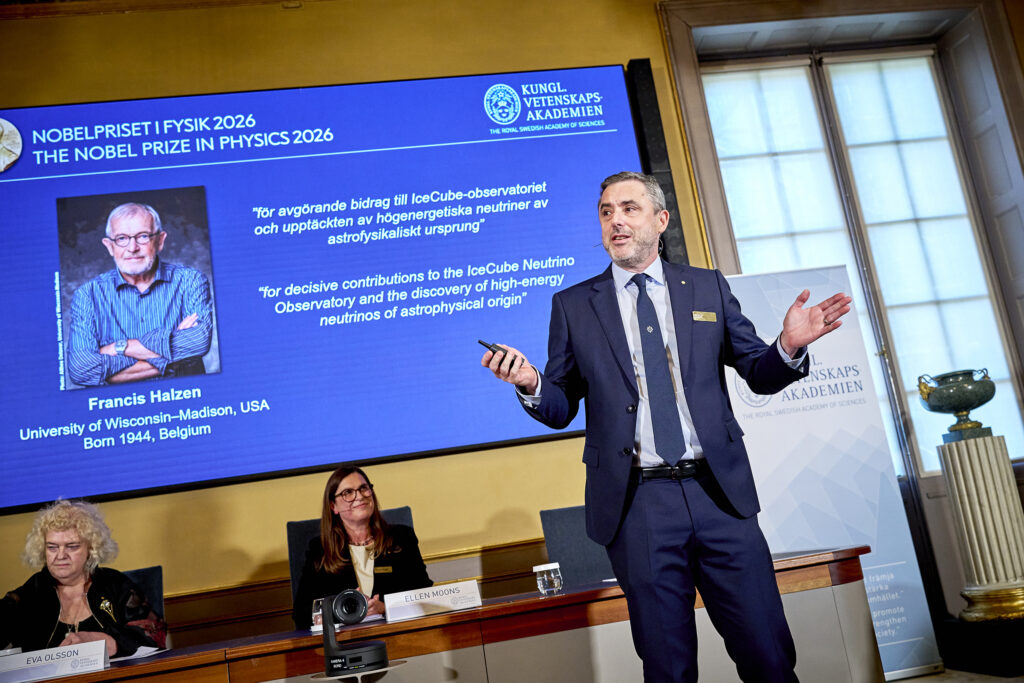
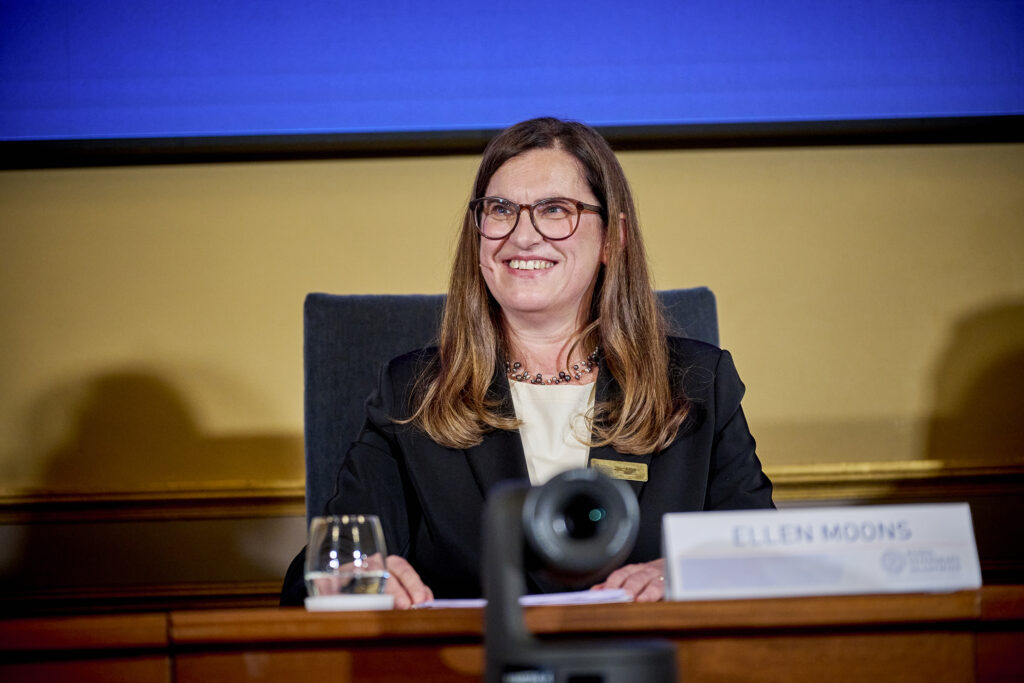
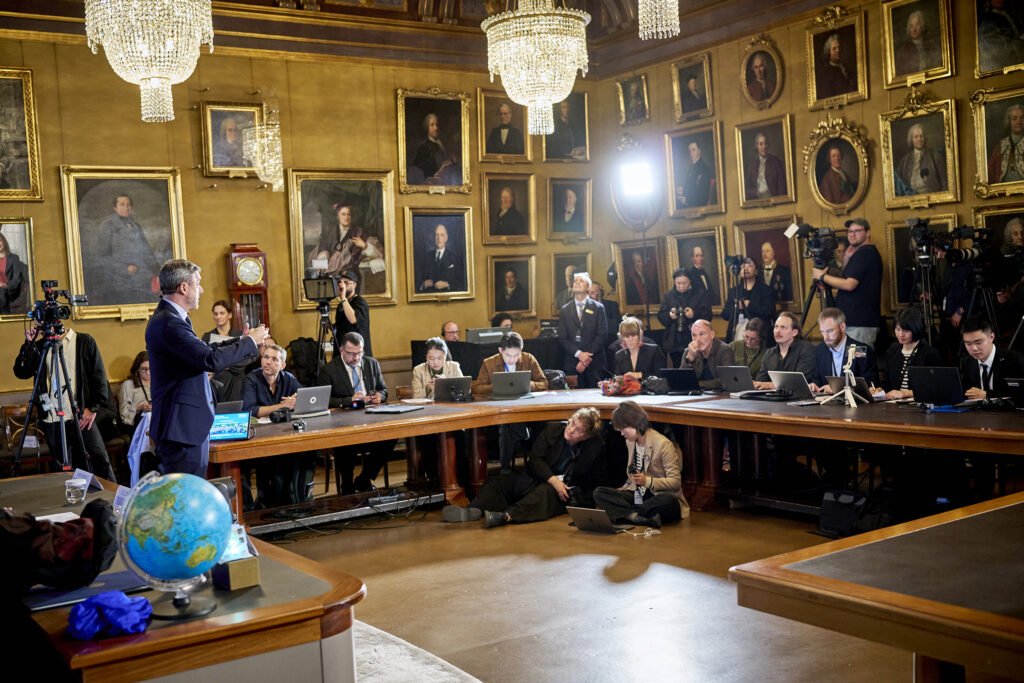
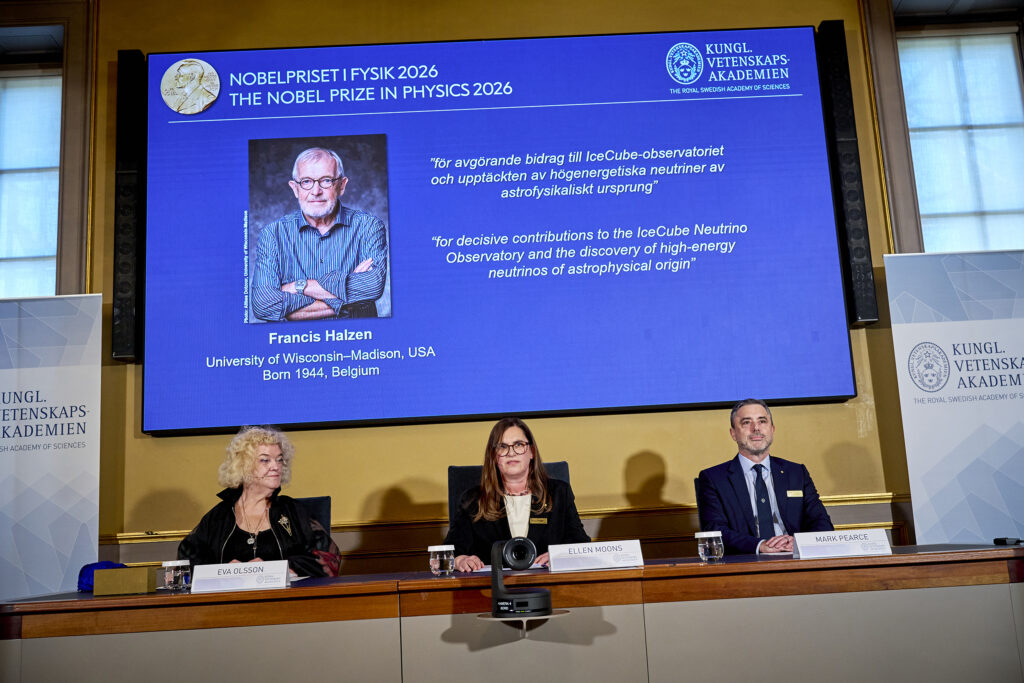
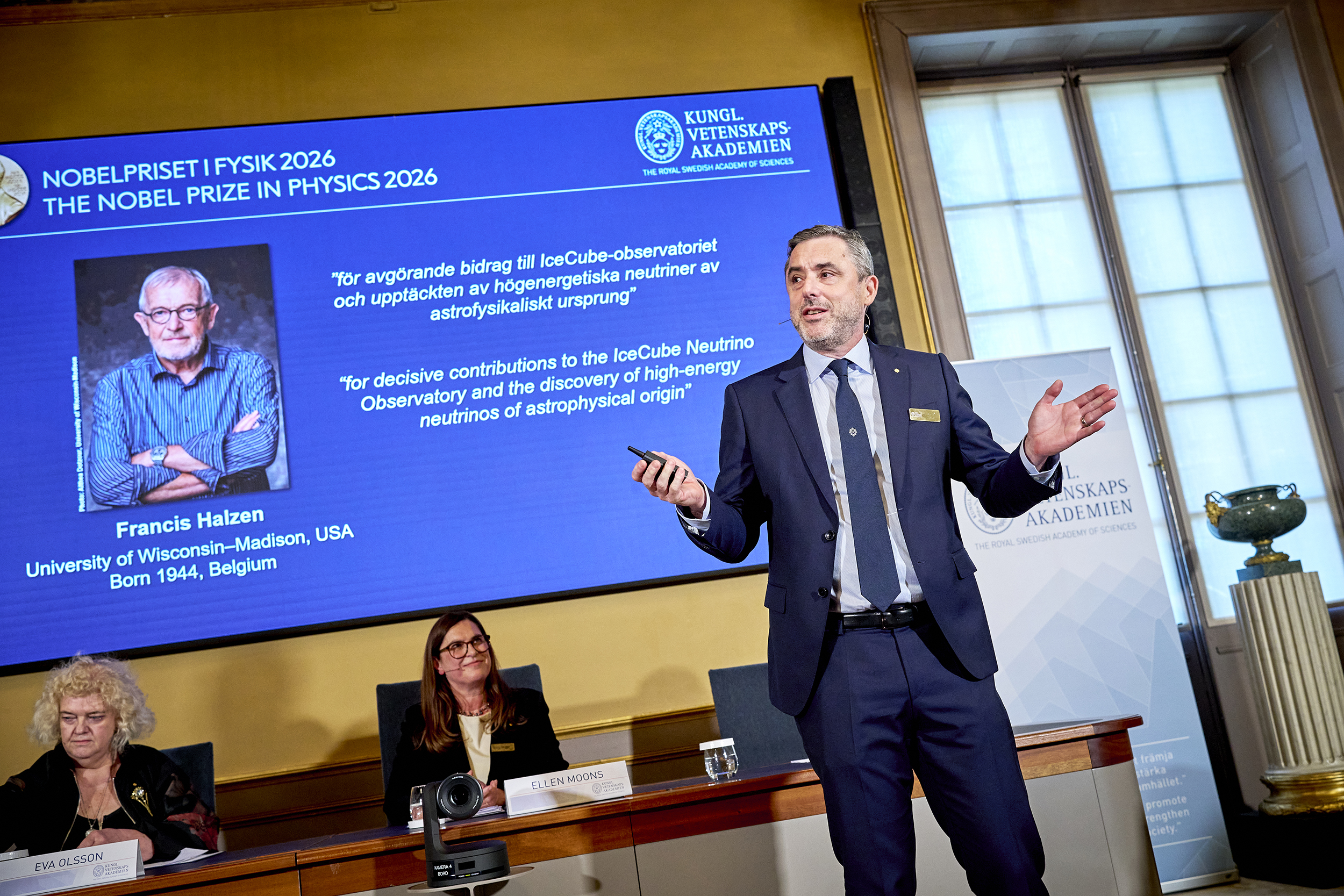
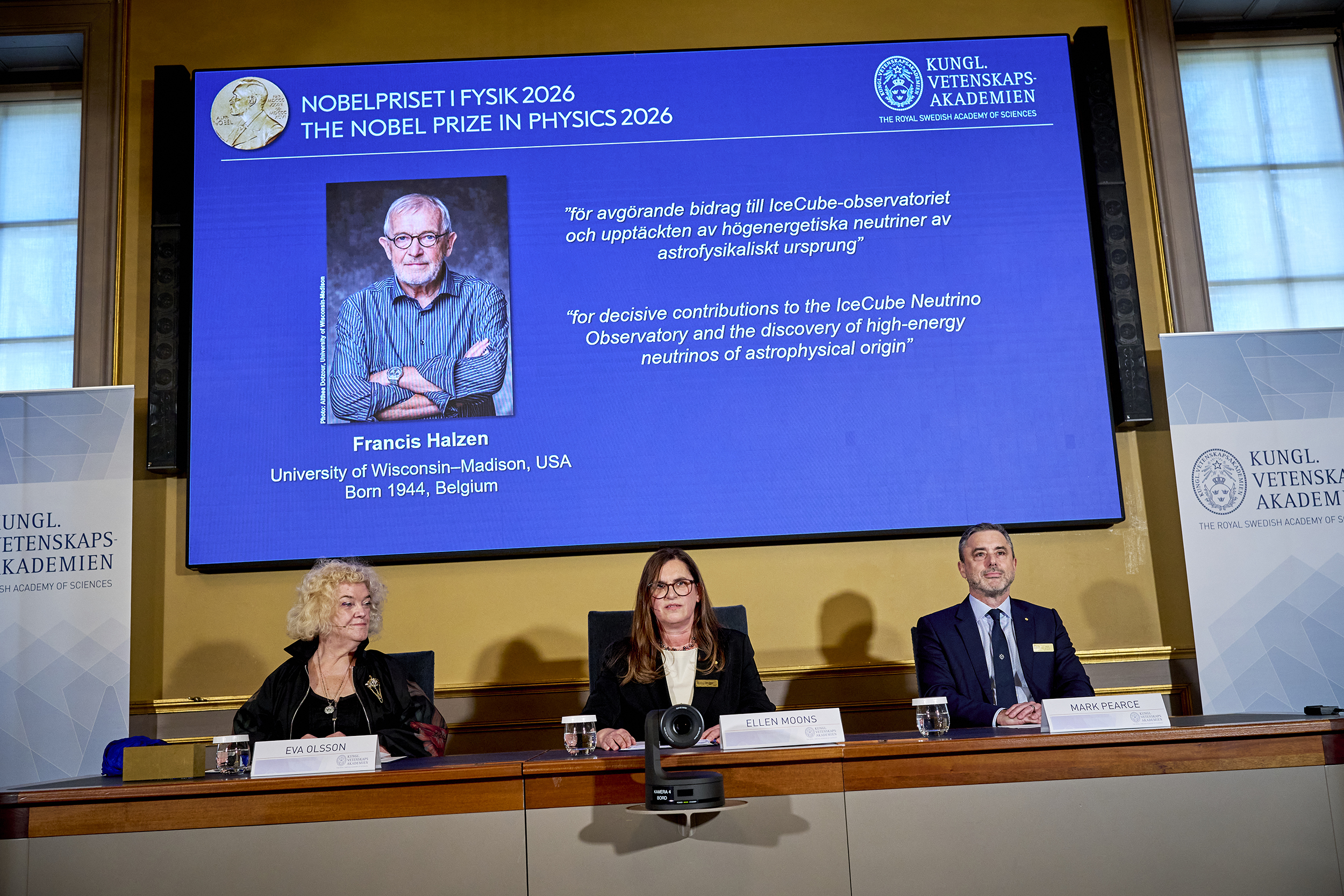
The Royal Swedish Academy of Sciences has decided to award the Nobel Prize in Physics 2026 to Francis Halzen, University of Wisconsin–Madison, USA.
“for decisive contributions to the IceCube Neutrino Observatory and the discovery of high-energy neutrinos of astrophysical origin”
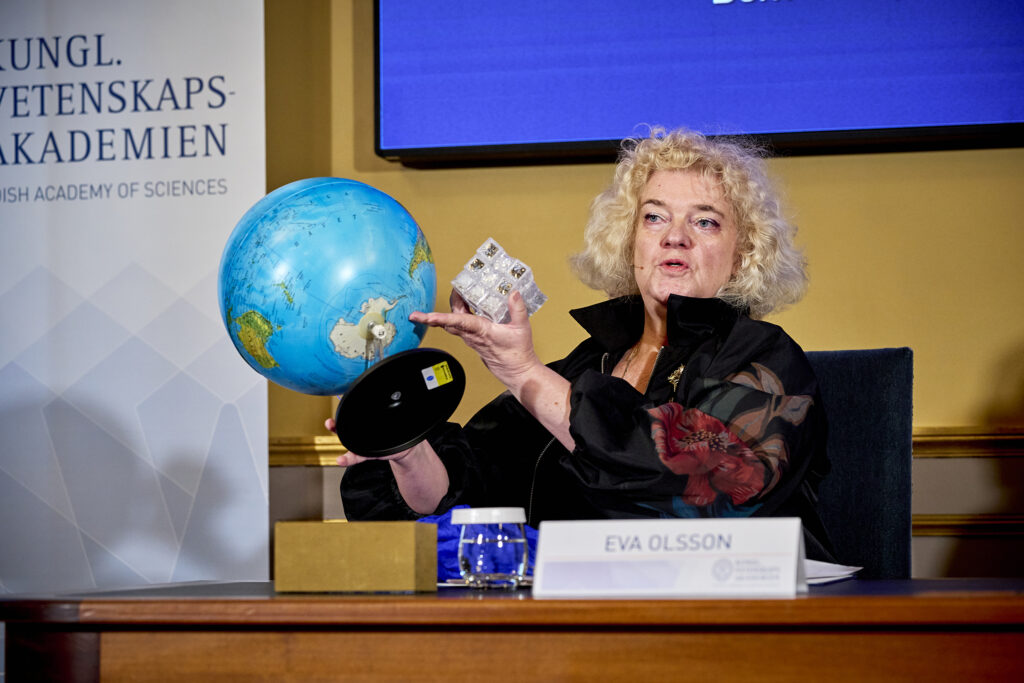
Francis Halzen realised that ice at the South Pole could be used to track particles known as neutrinos. His vision and scientific leadership have been fundamental for the IceCube Neutrino Observatory – a cubic kilometre of ice that is equipped with light sensors. Using IceCube, researchers can capture neutrinos from extremely energy-rich processes in the distant universe.
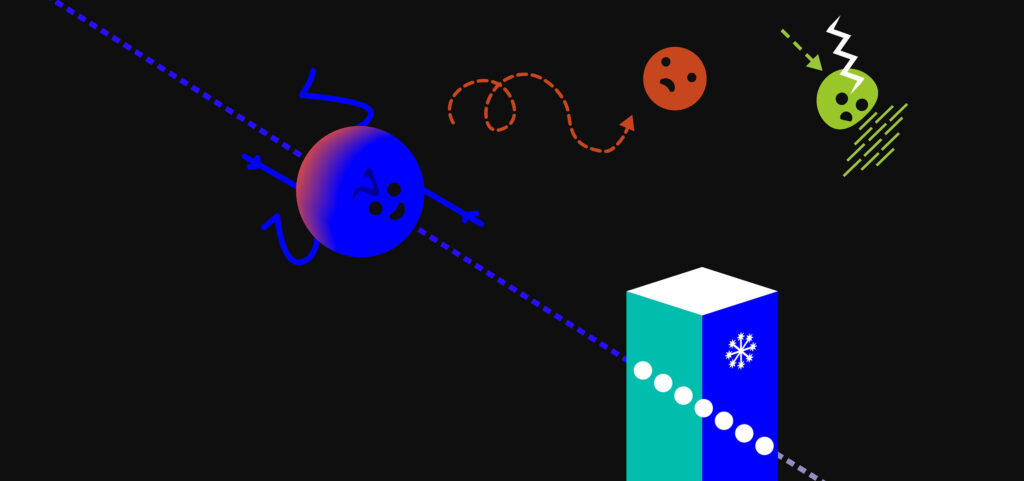
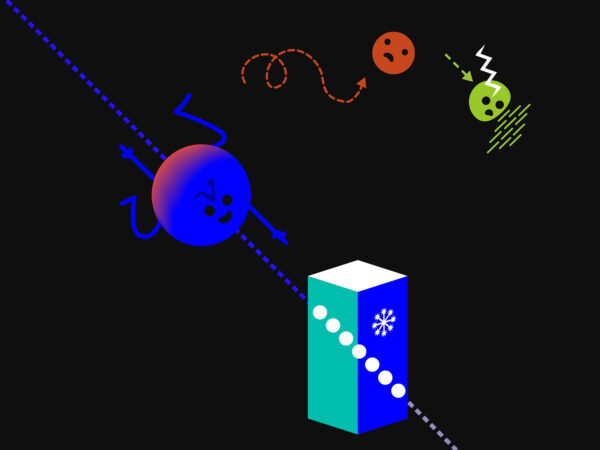
Neutrinos are everywhere, but they do not make themselves known. They pass all the way through the Earth and through our bodies without us noticing. Very rarely, a single neutrino will interact with an atomic nucleus, which makes it possible for someone with the right equipment to discover them.
Scientists have long known that the cosmos contains natural particle accelerators, which fire out particles with energies up a million times more than can be achieved in laboratories on Earth. Much about these sources is mysterious: what are they, where are they, and what are the main processes inside them?
Neutrinos with extremely high energies are created in the same environments as other types of particles. However, unlike other particles, neutrinos reach us without changing direction or losing energy. This means they can provide information that is not available in any other way.
Francis Halzen first presented his vision for capturing neutrinos at the South Pole in 1988. When a neutrino collides with an atomic nucleus, it produces a flash of light that can be tracked by sensors in the clear glacial ice. The South Pole’s ice has many advantages, as it is free from various types of interference and the area is geologically stable, with no earthquakes. Halzen and his idea soon gained the support of other researchers and, just a few years later, preliminary testing was conducted on sensors in ice.
Cosmic neutrinos with extremely high energies are very rare, so an enormous volume of ice is needed to observe an adequate number of collisions. IceCube covers an entire cubic kilometre and was finished in 2011. Researchers soon discovered the first high-energy neutrinos and, a few years later, could publish their discovery of neutrinos that must originate far outside our solar system. The search for the universe’s neutrino sources could begin in earnest.
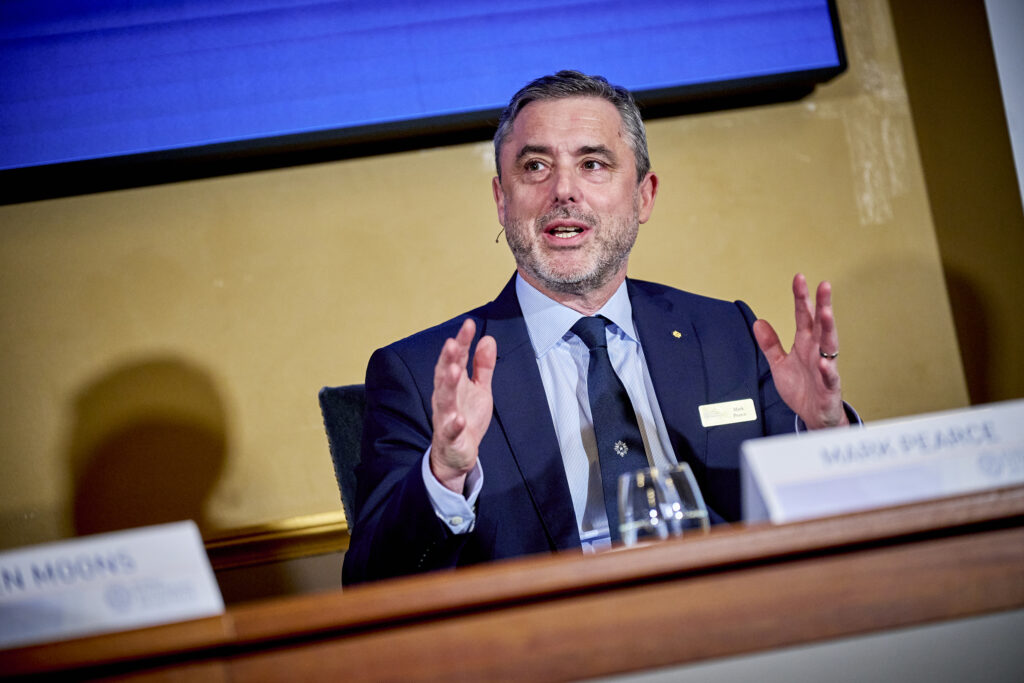
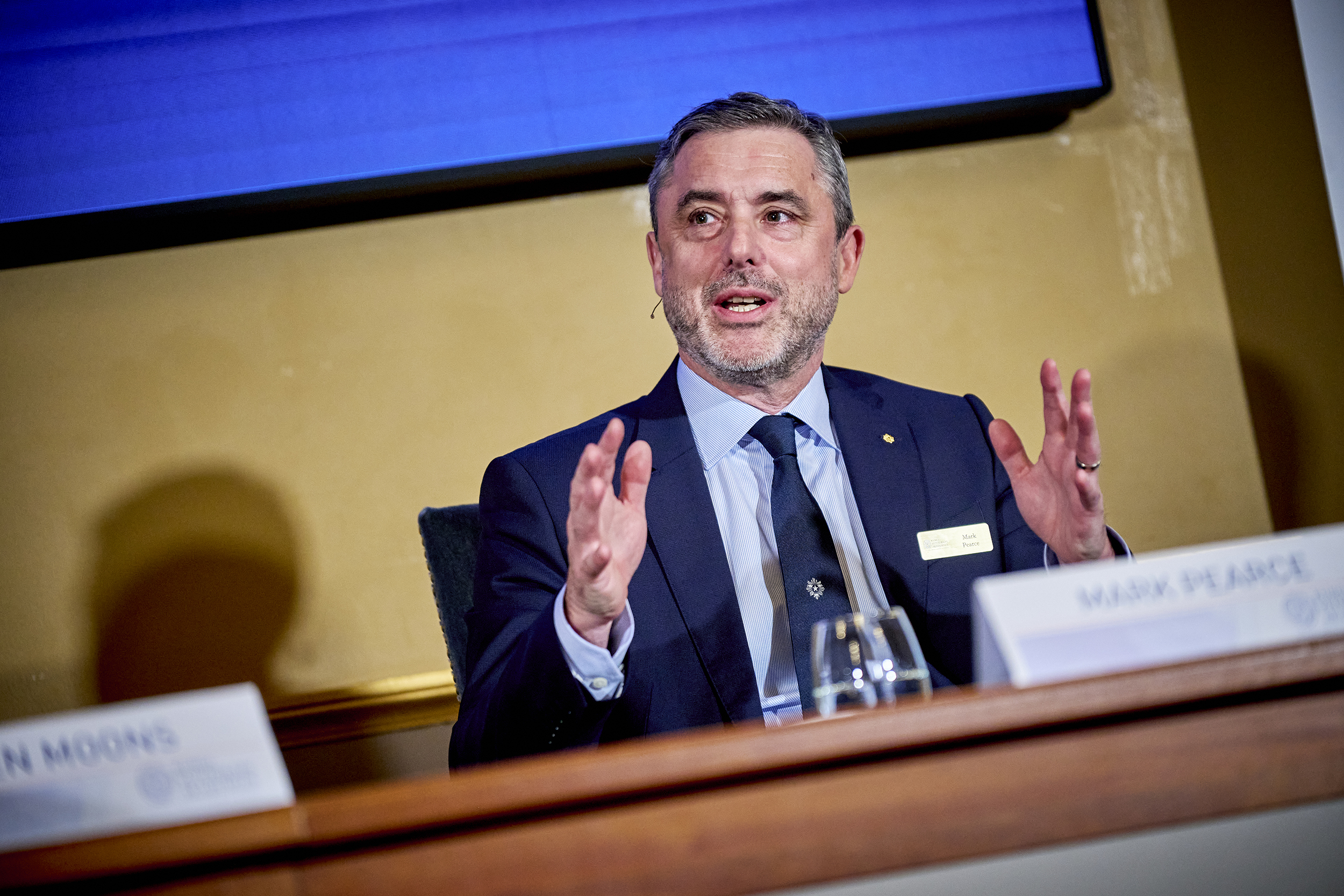
“Francis Halzen has led an international team of researchers and engineers who have provided us with a fantastic instrument. His tenacity and scientific vision has paved the way for a new kind of astronomy,” says Mark Pearce, Chair of the Nobel Committee for Physics.
The neutrino interactions that are continuously collected by IceCube will provide researchers with novel knowledge about the violent settings in which high-energy neutrinos can be created – and could even reveal previously unknown cosmic phenomena.
Laureate
Francis Halzen, born 1944 in Tienen, Belgium. PhD 1969 from KU Leuven, Belgium. Professor at University of Wisconsin–Madison, USA.
Francis Halzen, University of Wisconsin–Madison
Prize amount: 12 million Swedish kronor.
More about this year´s prize
Illustrations, terms of use
The illustrations are free to be used by media for news reporting about the Nobel Prizes and the Prize in Economic Sciences, individual teachers and educators for educational purposes, individual researchers for research purposes, or private individuals for personal, non-commercial use. No modifications are allowed, and “©Johan Jarnestad/The Royal Swedish Academy of Sciences” must be noted. Commercial use for advertising purposes is not permitted.
For other uses, permission from the Royal Swedish Academy of Sciences is required. To apply for permission, please use the Academy’s contact form
Contacts
Press contact
Eva Nevelius, Press Secretary, the Royal Swedish Academy of Sciences
+46 70 878 67 63, eva.nevelius@kva.se
Experts
Ulf Danielsson, the Nobel Committee for Physics, the Royal Swedish Academy of Sciences
+46 70 314 10 86, ulf.danielsson@kva.se
Mark Pearce, the Nobel Committee for Physics, the Royal Swedish Academy of Sciences
+46 70 166 74 86, pearce@kth.se
Read more about the Nobel Prize
The official Nobel Prize website
The Royal Swedish Academy of Sciences, founded in 1739, is an independent organisation whose overall objective is to promote the sciences and strengthen their influence in society. The Academy takes special responsibility for the natural sciences and mathematics, but endeavours to promote the exchange of ideas between various disciplines.
Nobel Prize® and the Nobel Prize® medal design mark are registered trademarks of the Nobel Foundation.