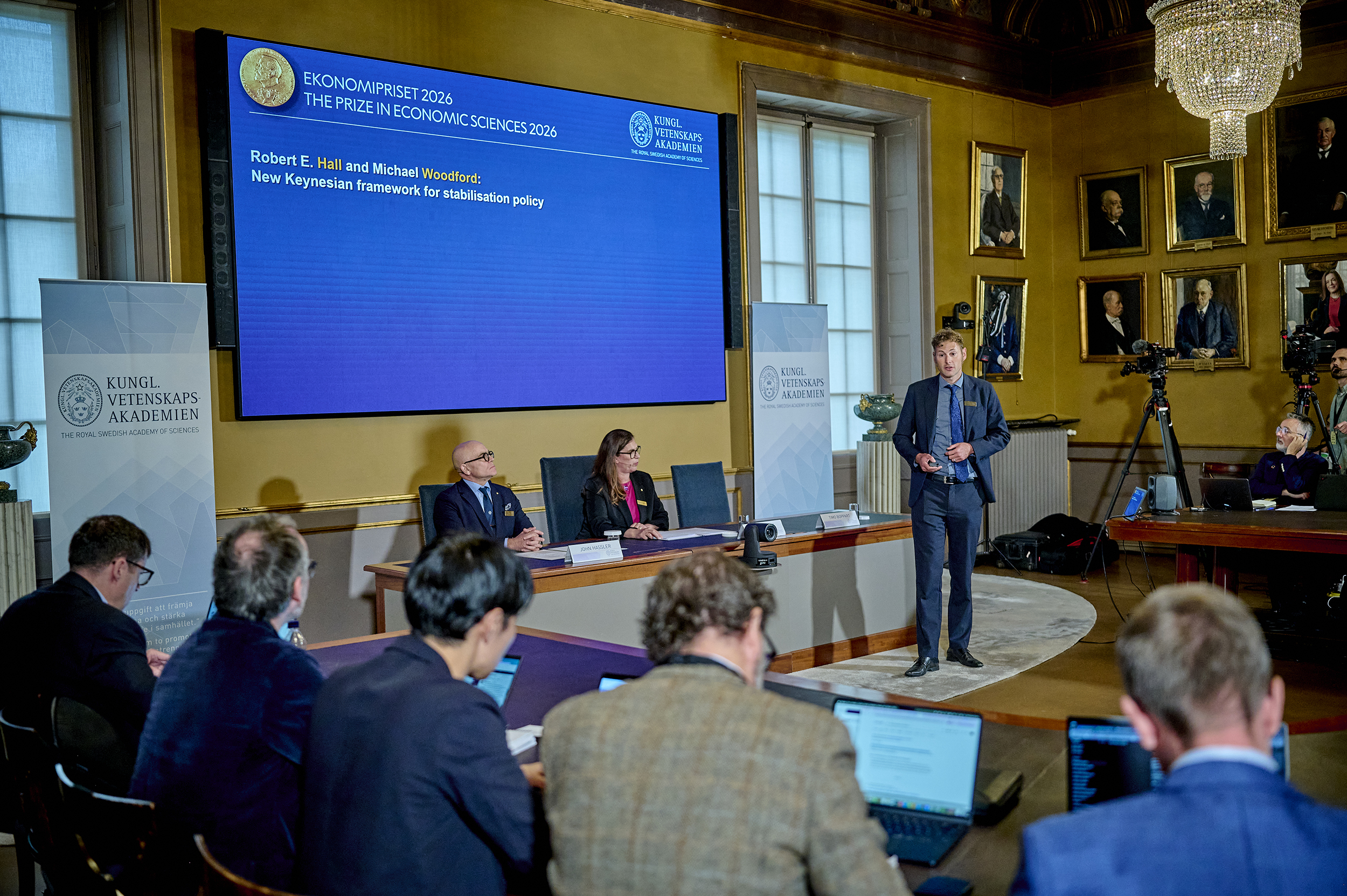
Economic development is characterised by alternating downturns and upturns. Stimulating or slowing down the economy at the right time can provide stability and allow us to avoid drawn-out recessions or runaway inflation. Robert E. Hall’s and Michael Woodford’s research has generated a paradigm shift in stabilisation policy. New Keynesian models, a result of their research, allow us to explain and quantify how stabilisation policy affects business cycles and are now used by central banks and finance ministries around the world.
Popular Science Background to the Prize in Economic Sciences 2026

“The central bank must reduce its policy rate to kickstart the economy.”
“The government should stimulate the economy by increasing households’ disposable income and boosting consumption.”
“Higher interest rates or reduced spending must be used to cool the economy, or we will lose control of inflation!”
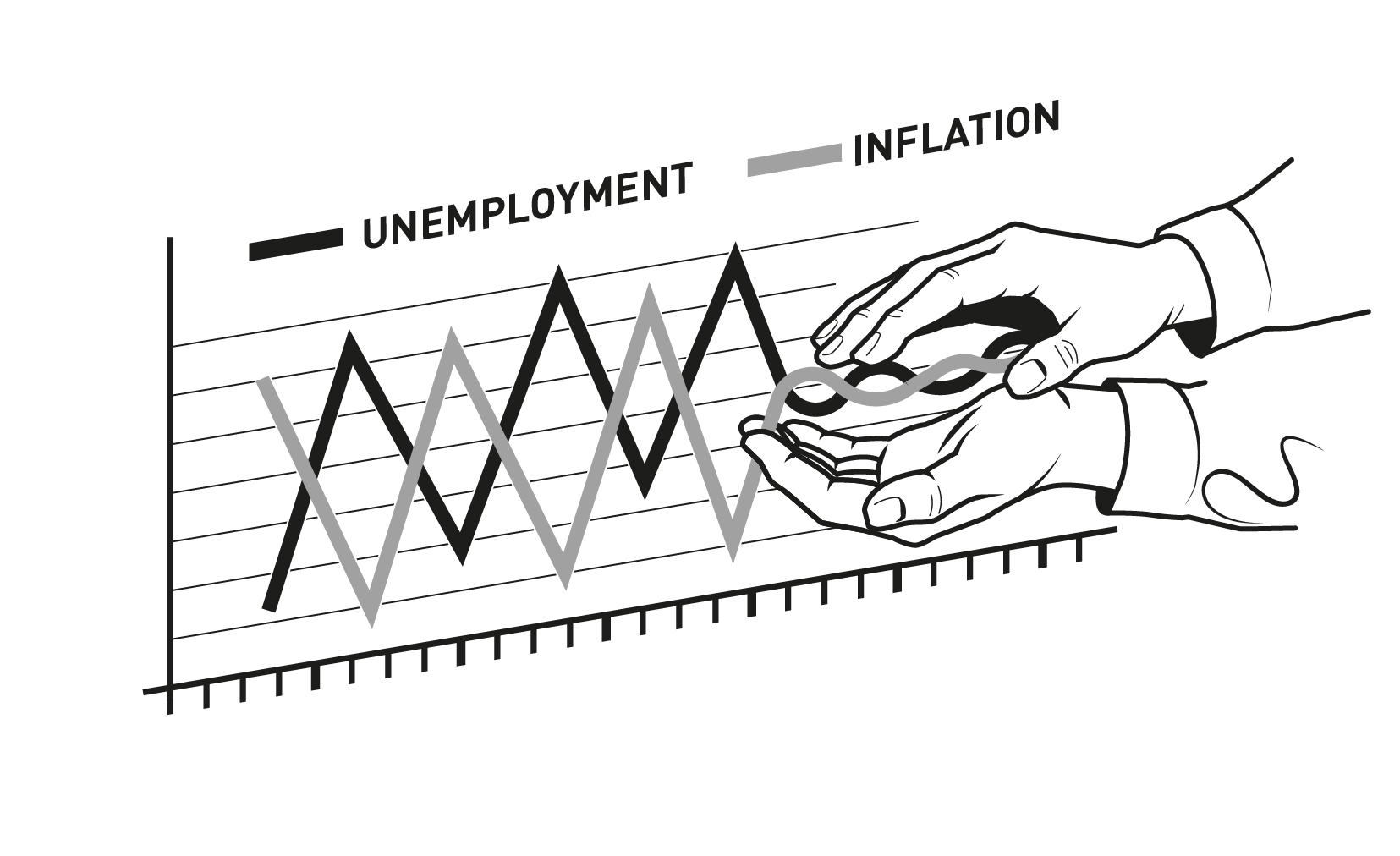
Statements such as these are frequently heard in public discussions of economic policy. They are all examples of tools for stabilisation policy, meaning the measures that governments and central banks implement to even out economic fluctuations. This could involve the central bank adjusting its policy rate, or the government raising or lowering taxes or transfers, such as child benefit, to influence household purchasing power. The aim of stabilisation policy is to reduce economic fluctuations – variations in unemployment and economic growth – so that the economy does not end up, or remain, in a situation with very high unemployment or uncontrolled inflation. Stable, steady macroeconomic development is better for both households and businesses than a roller coaster of deep valleys and high peaks. Poorer households with small margins tend to be particularly disadvantaged by excessive economic fluctuations.
Robert E. Hall’s and Michael Woodford’s research has made us better equipped to manage economic downturns. They laid the foundation of the New Keynesian paradigm, in which models are built upon microfoundations, which means from the bottom up. Economic outcomes are the result of millions of decisions made at the microlevel by households and businesses. Using models based upon this approach, rather than simply studying the economy from a macro perspective, like a bird’s eye view, Hall’s and Woodford’s research has generated a paradigm shift in the theory of stabilisation policy.
Stabilisation policy became ineffective
The insight that stabilisation policy can have great benefits can be traced back to John Maynard Keynes’s almost century-old work. His idea, which is still the foundation of stabilisation policy, was that the total demand for goods and services from households and businesses does not automatically align with what the economy can produce. If demand is too low, there will be high unemployment and low growth. If it is too high, the economy will overheat and inflation will rise. Peaks and troughs can be evened out by stimulating demand (accelerating) when it is too low and slowing it (braking) when it is too high.
The traditional Keynesian models relied upon the assumed stability of statistical correlations between key macroeconomic variables such as inflation, consumption, unemployment and production. One example is the relationship between inflation and unemployment – the Phillips curve – which shows that inflation tends to be low when unemployment is high, and vice versa. Another is that consumption is determined by households’ total disposable income: more disposable income leads to higher consumption. The relationships between these variables were assumed to be approximately linear, so that if one variable changed, the other changed in proportion. Using this assumption, it was straightforward to calculate how much to speed up or slow down the economy – but this approach turned out to be too simple to work consistently.
During the oil crises of the 1970s, the relationships between the macro variables became much more unstable than researchers and decisionmakers had believed them to be. Inflation rose despite increasing unemployment, and the link between income and consumption appeared not to be as reliable as had been assumed. This meant that stabilisation policy did not work – there was too much stimulus at the wrong time, which had long-term consequences in the form of many years of low growth and high inflation.
Influential economists such as Robert E. Lucas, Jr. (the 1995 Laureate in Economic Sciences) argued that the problem with Keynesian stabilisation policy was precisely the assumption that the relationship between the macroeconomic variables was stable. If these models were to work, they must instead have microfoundations, meaning that they must build on robust microeconomic relationships. Inflation is determined by the pricing decisions made by thousands of individual businesses. The total of private consumption is based on decisions made by millions of households, and the decisions of individual businesses and employees determine the volume of production. Macroeconomic phenomena can only be understood by studying the behaviour of individual actors and adding it all together.
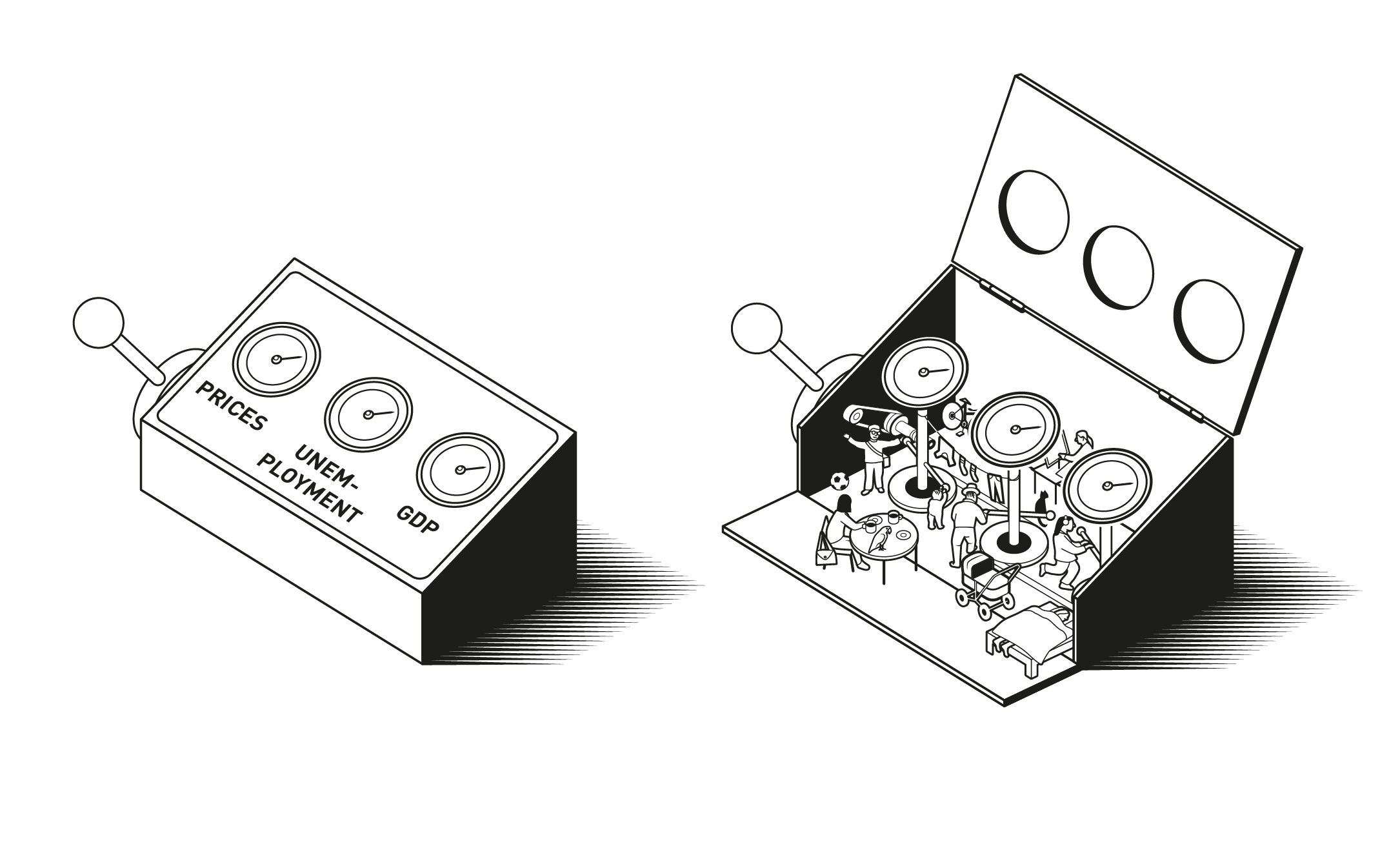
Lucas’s criticism gained traction – but building models with microfoundations was more easily said than done. They had to solve the problems that the traditional Keynesian models could not, as well as being sufficiently simple and understandable to be widely used.
One particularly important problem for stabilisation policy is the question of how private consumption is determined. Previous theoretical research argued that consumption depends at least as much on individual household’s expectations of future income as on their present income. This complicates stabilisation policy because households’ expectations of the future are not constant, but are affected by variations in factors such as taxes, interest rates or inflation. However, the hypothesis about the importance of expectations was difficult to test and quantify. Household expectations are not directly observable.
Many researchers tried to find indicators for a household’s expectations of future income to see whether decisions on consumption could be predicted, but none were successful – until Robert E. Hall started thinking in an entirely new way.
Hall turns research upside-down
Hall’s central idea was that if households’ consumption is governed by their expectations of future income and other relevant considerations, then their decisions on consumption are the perfect indicator of their expectations: if they are optimistic, they will consume more than if they are pessimistic. This also means that they will only adjust their consumption if they change their assessment of the future, which requires the arrival of new and relevant information. Because, by definition, new information cannot be predicted – as then it would not be new – nor can changes in consumption be predicted, if the theory is correct. Hall had thus turned the research approach on its head: instead of looking for indicators that could forecast household consumption, researchers should test the hypothesis that it is not possible to forecast changes in consumption.
It turned out that Hall’s hypothesis was correct. No variables appeared to be of decisive importance for predicting changes in consumption. Even Hall’s most sceptical colleagues were convinced; the insight that there was now a natural benchmark was as important as demonstrating the accuracy of the theory. Changes in consumption that can be predicted must depend on deviations from the assumptions in the theory – such as some households being unable to borrow or having no savings, so living from hand to mouth. Using the theory’s benchmark, researchers could estimate the proportion of consumers who were in this situation.
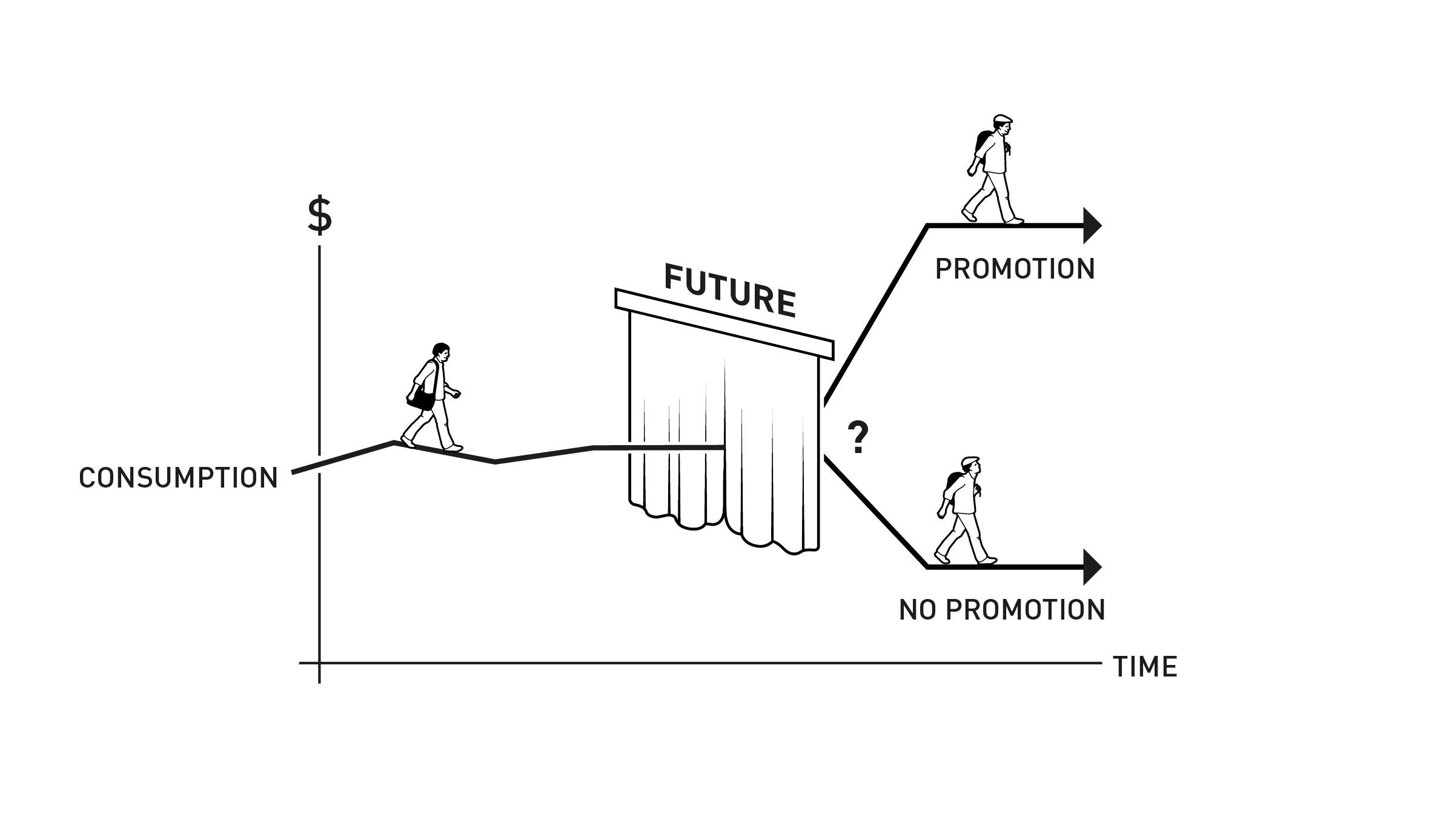
Hall presented his results in an article in 1978, which was something of a eureka moment for research. His work became key to the development of modern research on consumption. Another important article was written by Hall and Fredric Mishkin in 1982. They used microdata for a number of individual households, showing that around 80 per cent of them made their consumption decisions in line with the theory, while the rest lived hand-to-mouth. The shares vary over time and between different countries, but they can be estimated. The insight that some households are forward looking when deciding how much to consume, while others are not, is an important element of the macroeconomic models now used by central banks and finance ministries.
By understanding the impact of expectations on consumption decisions, Hall had solved a problem that had long puzzled researchers. His insights were of decisive importance for the New Keynesian paradigm shift in macroeconomics.
Woodford’s model
In a book from 2003, Michael Woodford presents a complete New Keynesian macro model built upon microfoundations. The book summarises the results from earlier articles written by Woodford and others. The macro model, with its three equations, is the prototype for all the New Keynesian models that have followed in its footsteps. Its purpose is to function as a kind of laboratory for policymakers. What happens to GDP and inflation if the interest rate is lowered? How much should interest rates be raised to stabilise inflation in a specific economic situation?
The traditional Keynesian models offered answers to these questions, but the answers had turned out to be unreliable. The new models used microfoundations, with descriptions of how individual actors make decisions about consumption, production and product prices, and provided more reliable answers.
One important element in Woodford’s model is the description of how consumption is determined. This is the largest share of the total demand for goods and services in most countries. The importance of consumption had also been appreciated in the traditional Keynesian approach, but what was revolutionary was the inclusion of Hall’s result – that consumption depends on households’ expectations of their future income.
Consumption also depends on the interest rate. If the central bank lowers its policy rate, savings become less profitable and consumption will be higher today than it is expected to be in the future. It is only if the rate is at an intermediate level, a neutral (or natural) rate of interest, that it neither stimulates nor reduces consumption. The concept of natural interest was introduced in the late nineteenth century by Knut Wicksell, one of Sweden’s most internationally influential economists. Inspired by Wicksell, Woodford showed that central banks can stimulate or suppress economic activity by adjusting interest rates, rather than by the amount of money in circulation. This was an important contribution that made the New Keynesian models more useful in practice.
Another element in the model describes how inflation is determined. It is based on individual businesses setting prices with the knowledge that it will be too expensive to adjust them every time demand or production costs change. Prices will thus be sticky. This pricing friction is the fundamental reason why demand is so important for production, according to Keynes’s reasoning. If demand falls but prices do not, there will be excess supply and thus an imbalance between supply and demand that can lead to an economic downturn. When an individual business’s pricing decision is used, it becomes apparent that when it does adjust a price, it must be forward looking. If the business believes that its competitors’ prices and its own costs will increase, it is best to set a higher price than it would with the opposite expectation. Businesses’ decisions are thus also governed by their expectations.
Because businesses look to the future, expectations about future interest rates are important for inflation. Consequently, credibility and transparency are important attributes for a central bank. This insight, which was not an element of the traditional Keynesian approach, has been of great practical significance for central banks; clear and credible communication about how they reason and what they plan to do has become vital to their operations.
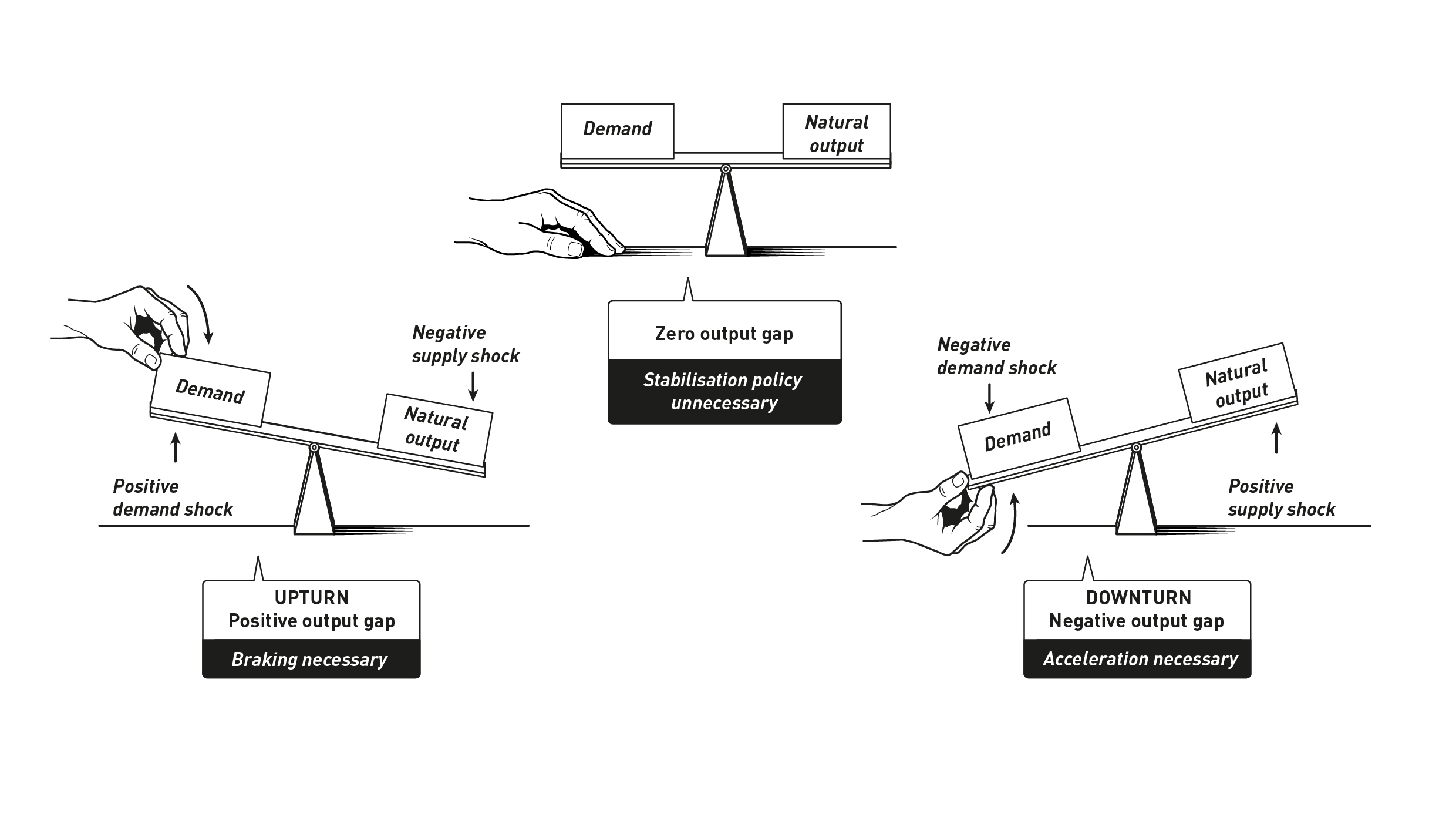
The second factor that governs inflation is the output gap, a concept Woodford introduced to describe the demand pressure in the economy. If the demand pressure is high, which means the gap is positive – typical of an upturn – prices are pushed upwards and inflation will be higher than normal. If the demand pressure is too low, which means the gap is negative – this tends to occur in a downturn – prices are pushed downwards and inflation will be lower than normal (see below). Formally, the gap is the difference between the actual output and natural output, meaning the output level that would prevail if market prices were freely variable and demand thus perfectly aligned with supply. The size of the output gap can therefore be regarded as a measure of the economy’s distance from the efficient utilisation of resources, and the task of stabilisation policy is to steer the gap toward zero.
The level of natural output can change over time. Sudden changes are called supply shocks, such as rapid hikes in energy prices, disturbances in international supply chains or other events that suddenly impact an economy’s output potential. If a negative supply shock means that natural output falls but demand does not, the output gap is positive. This is possible if businesses, despite increased costs, do not adequately increase their prices. Demand will then be too high, even though it has not increased.
Even if demand, and thus output, falls slightly in association with the negative supply shock – perhaps due to increased pessimism among households, which then reduce their consumption – the output gap could still be positive if natural output decreases more than actual output. This type of supply shock can then lead to inflation, reduced output and increased unemployment. Unlike the traditional Keynesian models, Woodford’s model recommends a cooling measure, such as increased interest rates, to avoid uncontrolled inflation. His insight has made it possible to respond to recent supply shocks more effectively than during the oil crises of the 1970s.
Woodford’s model appears simple, but seminal research by Woodford and several other macroeconomists was required to produce this new model on microfoundations. Its simplicity combined with how well it aligns with reality meant it quickly found favour with policymakers at central banks and finance ministries. The model can also be refined and adapted to each country’s circumstances. For example, the Swedish central bank has its own New Keynesian model that is adapted to Swedish conditions.
An adaptable model
As with all paradigm shifts, New Keynesianism was the start of a flourishing line of economic research, not the final word. Research continues to advance and, since the Laureates’ works were published, the models have been developed and refined; this process can be expected to continue as our economies keep changing. The models can easily be adapted to the varying circumstances encountered by households and businesses.
New Keynesian models are now used by finance ministries and central banks around the world, helping them to make informed and balanced decisions on stabilisation policy. Quite simply, there are no other viable alternatives. So, the next time your central bank sets its rate, you can be sure that one input in its decision relied on calculations performed using a New Keynesian model with microfoundations.
The Laureates’ research has made it possible to manage major macroeconomic crises far more effectively than before. It has been hugely beneficial during the pandemic and the energy crises of recent years, which have not had such long-term consequences for growth and inflation as in the critical periods of the 1970s. We have not become mired in a catastrophic economic depression like that of the 1930s. Recessions and episodes of high inflation have not disappeared, but they are less long-lasting.
The Prize in Economic Sciences 2026
Laureates
Robert E. Hall, born 1943 in Palo Alto, CA, USA. PhD 1967 from Massachusetts Institute of Technology, Cambridge, USA. Professor at Stanford University, CA, USA.
Michael Woodford, born 1955 in Chicopee, MA, USA. PhD 1983 from Massachusetts Institute of Technology, Cambridge, USA. Professor at Columbia University, New York, USA.
Citation
“for microeconomic foundations of macroeconomic stabilisation”