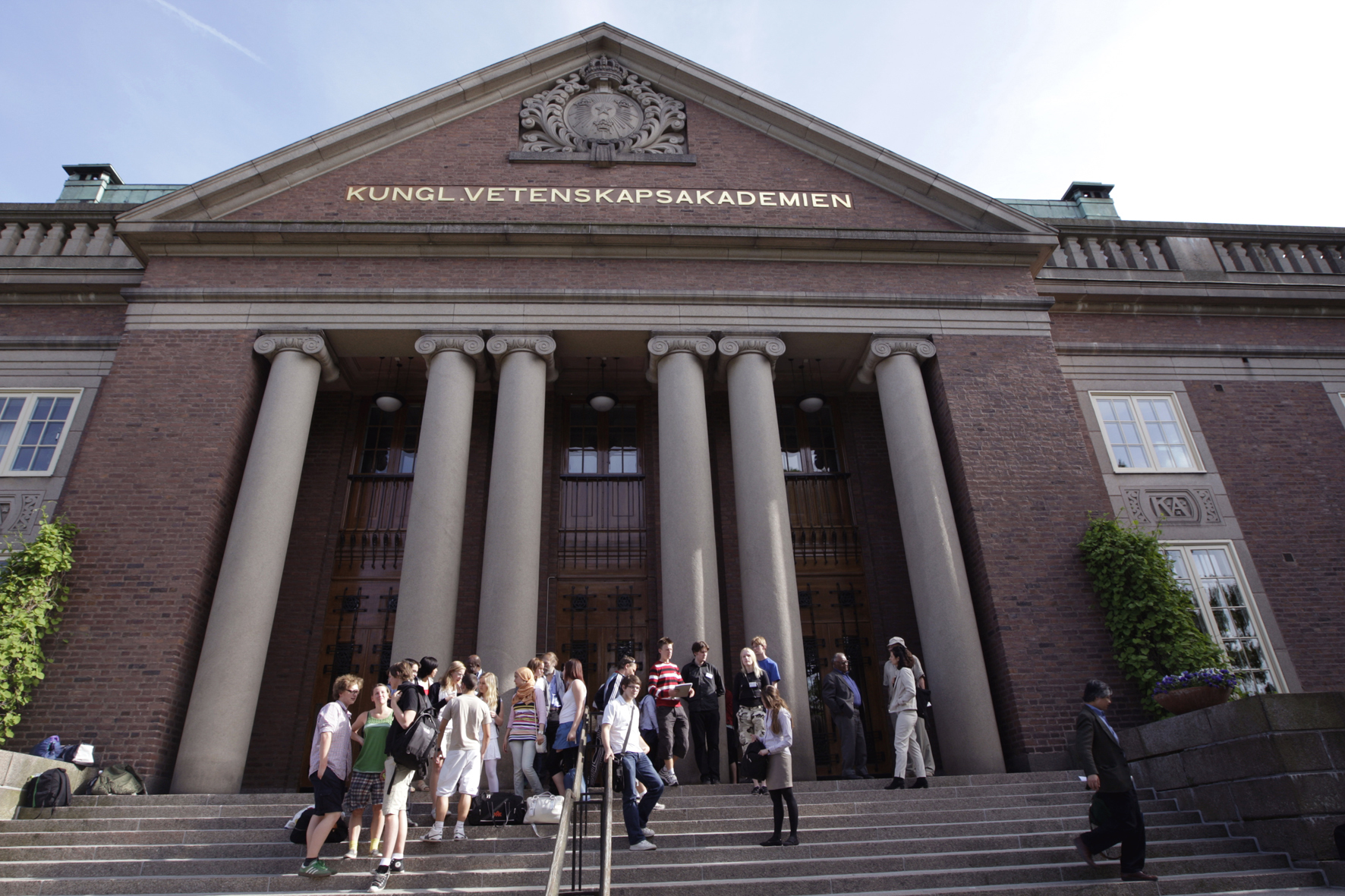
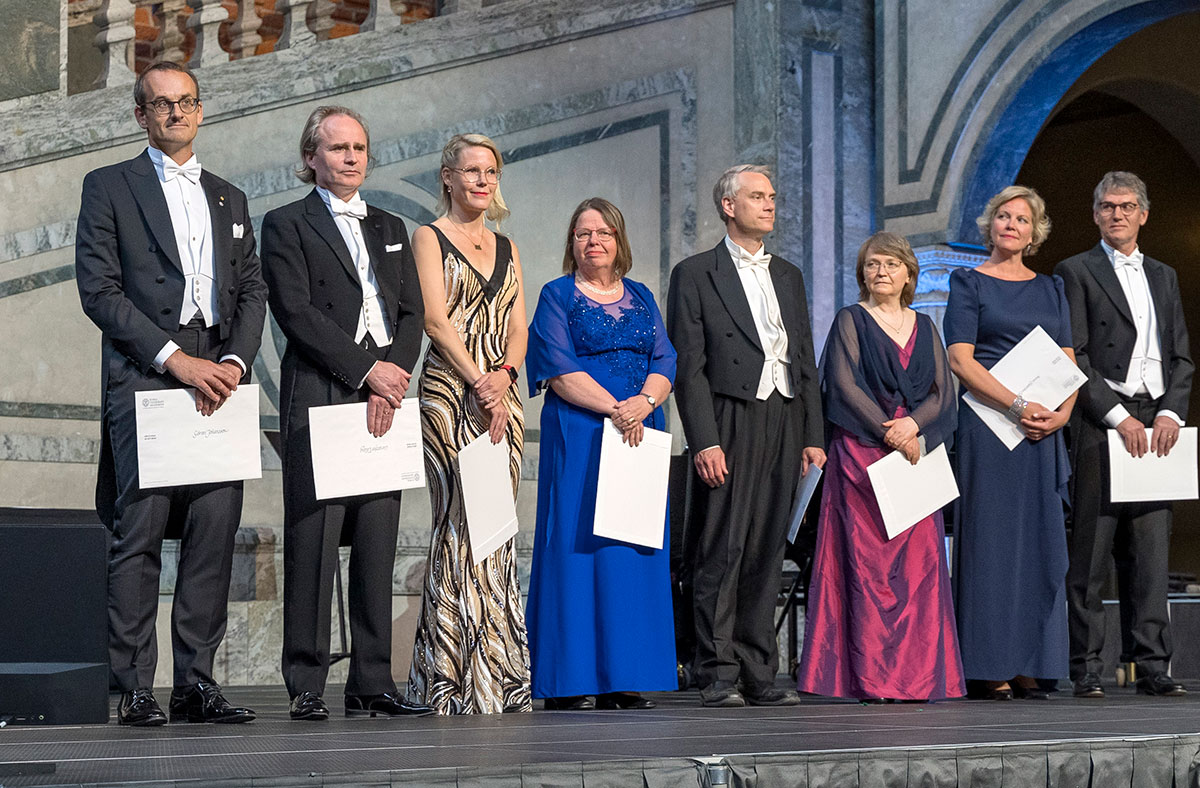
At the Royal Swedish Academy of Sciences’ General Meeting on 6 May, three new Swedish members were elected to the Academy: two to the Class for mathematics and one to the Class for humanities and for outstanding services to science. The new members’ research includes dynamical systems and complex geometry, as well as the use of ancient DNA as a tool in archaeology.
Class for mathematics
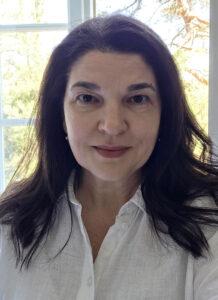
Danijela Damjanović is Professor of Mathematics at KTH Royal Institute of Technology and conducts research in dynamical systems and ergodic theory. These areas study how complicated systems evolve over time and explore qualitative long term behaviour of chaotic systems. Such mathematical models are used, for example, in physics and other natural sciences.
Damjanović studies smooth dynamical systems with various types of symmetries and investigates how these symmetries affect the dynamics. Her research is connected to Lie groups and higher-rank group actions on homogeneous spaces. She has made several influential contributions to the rigidity theory in dynamical systems, with a particular focus on how symmetries of chaotic systems can force the existence of additional symmetries and, in some cases, make these systems amenable to description by algebraic models.
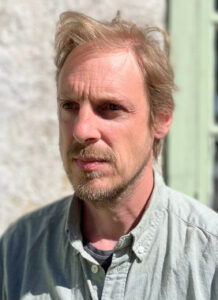
David Witt Nyström is Professor of Mathematics at the Department of Mathematical Sciences at Chalmers University of Technology and the University of Gothenburg. His area of research is complex geometry, a field of mathematics that studies advanced geometric structures using complex numbers. His research also has connections to global pluripotential theory and related areas such as convex geometry.
The questions he studies include geodesics in spaces of Kähler metrics, volumes of cohomology classes, and non-Archimedean Kähler geometry. A central part of his research concerns the so-called Yau–Tian–Donaldson conjecture, which relates the existence of certain Kähler metrics to geometric notions of stability. Witt Nyström has developed new methods to study these questions, including by formulating problems in terms of filtrations and using tools from pluripotential theory and non-Archimedean geometry.
David Witt Nyström, the University of Gothenburg
Class for humanities and for outstanding services to science
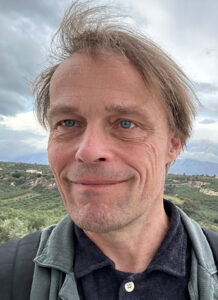
Anders Götherström is Professor of Molecular Archaeology at Stockholm University and one of the founders of the Centre for Palaeogenetics. Throughout his career, he has used genetic information to address archaeological questions. He is a pioneer in establishing ancient DNA as a tool for archaeological interpretation. One example is the analysis of DNA from chewed birch bark pitch from the Stone Age on the Swedish west coast, which revealed the individuals’ origins, a severe periodontal infection, and what they had eaten shortly before chewing the bark. Much of his research has focused on the Stone Age and the spread of agriculture into Europe. In more recent years, his work has increasingly focused on the Iron Age, the Viking Age, and the Middle Ages, primarily through studies of human populations.
By analyzing the genomes of approximately 17,000 present-day individuals, in combination with genetic data from archaeological materials, he showed how gene flow has shaped the population of Scandinavia from around the year 0 onward. The study reveals, among other things, a clear westward gene flow reaching all of Scandinavia during the Viking Age, as well as eastern influences that particularly characterized Gotland and the Mälaren Valley during the same period. Together with analyses of material from warships, hillforts, boat burials, and medieval burial sites, this provided an overall picture of how people moved and interacted within the region.
Anders Götherström frequently comments on his research in the media and gives lectures to the general public. One of his most well-known discoveries is the DNA study of a warrior buried in Birka, which revealed that the individual was a woman.