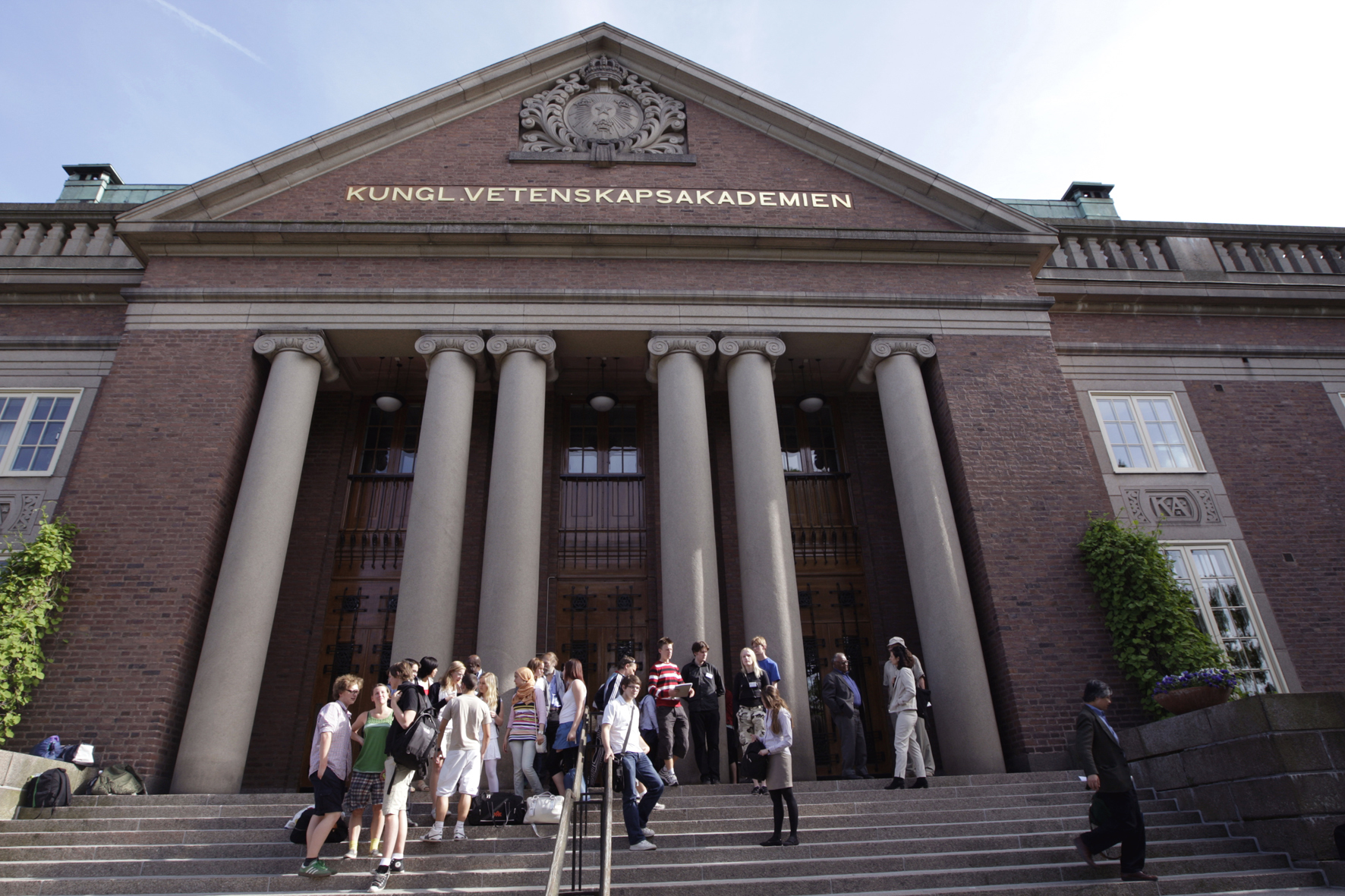
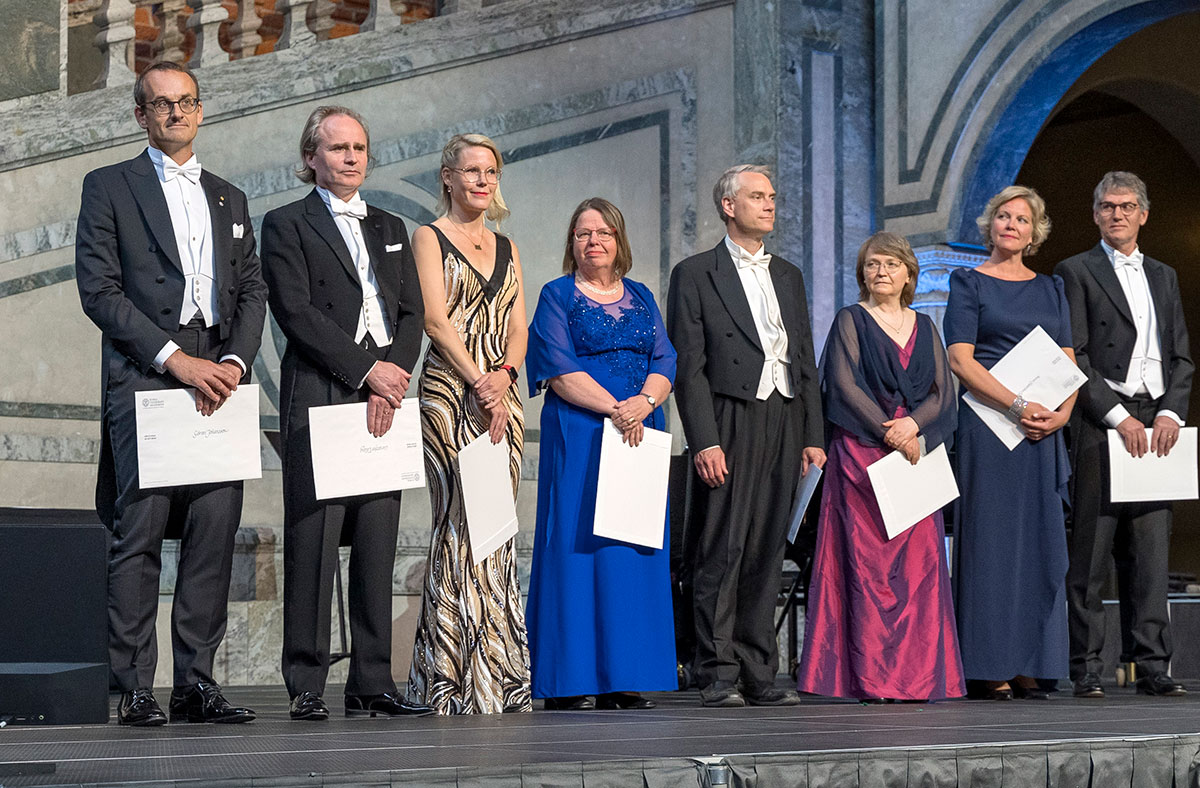
The Royal Swedish Academy of Sciences was founded in 1739, inspired by the learned societies that became fashionable in Europe in the early 1700s. From the very beginning, one of its aims was to spread beneficial knowledge to the Swedish people.
In the eighteenth century, when the Royal Swedish Academy of Sciences was founded, its aim was “to develop and disseminate knowledge, natural science, economics, trade and beneficial arts and manufacturing in Sweden”. It was also to provide support for research and scientific progress. Initially, one way in which this was done was through publications in simple Swedish. The first members included Carl Linnaeus, Anders Celsius, Anders Johan von Höpken and Christopher Polhem.
The Academy’s activities have changed over the centuries and its current structure, which focuses on mathematics and the natural sciences, was established by the famous chemist Jöns Jacob Berzelius in the 1820s.
On this page
- The eighteenth century: public education, almanacs and astronomy
- The nineteenth century: Berzelius and Stockholm’s scientific stronghold
- The twentieth century: a city of science, the Nobel Prizes and a new phase
- The twenty-first century: new initiatives and public engagement
Founded in the eighteenth century
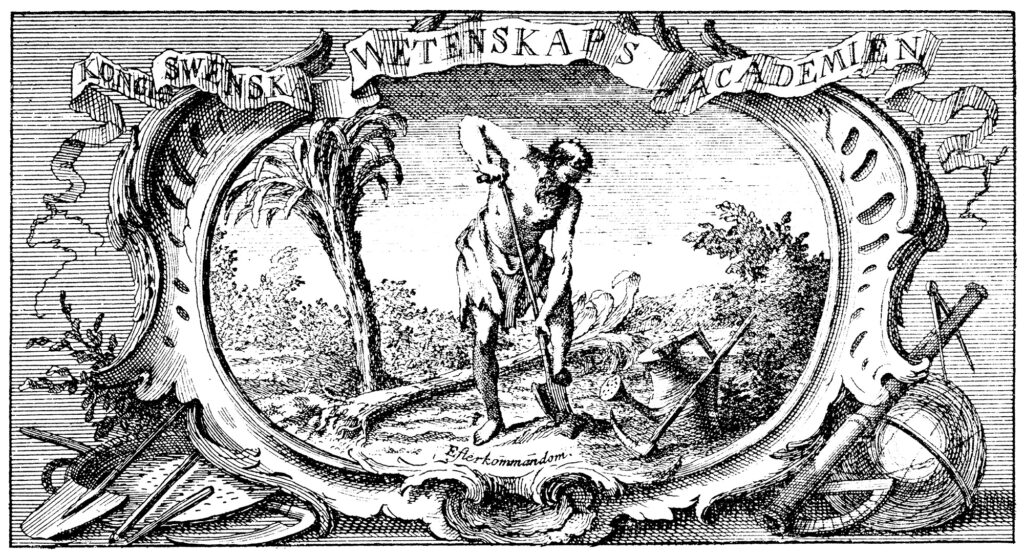
The Swedish Academy of Sciences was founded on 2 June 1739, by some of the time’s leading scientists and politicians: Jonas Alströmer, Sten Carl Bielke, Carl Wilhelm Cederhielm, Anders Johan von Höpken, Carl Linnaeus (later von Linné) and Mårten Triewald. Two years later, after King Fredrik I had approved its statutes, it became a royal academy.
Inspired by learned societies in Europe
It was not by chance that the Academy was created in the early 1700s. Its founders had been inspired by events in Europe, where scientific academies had been formed in various countries. Great Britain’s Royal Society, for example, was founded in 1660, and the Académie des Sciences in France in 1666.
During this period there was a need to complement the traditional seats of learning, the universities, as these were considered as simply reproducing old knowledge, rather than producing any new and useful knowledge. This meant there was an emerging need for a new scientific forum. From the very start, the aim was to disseminate new findings that could benefit the country and its people, not least economically.
Science for “future generations”
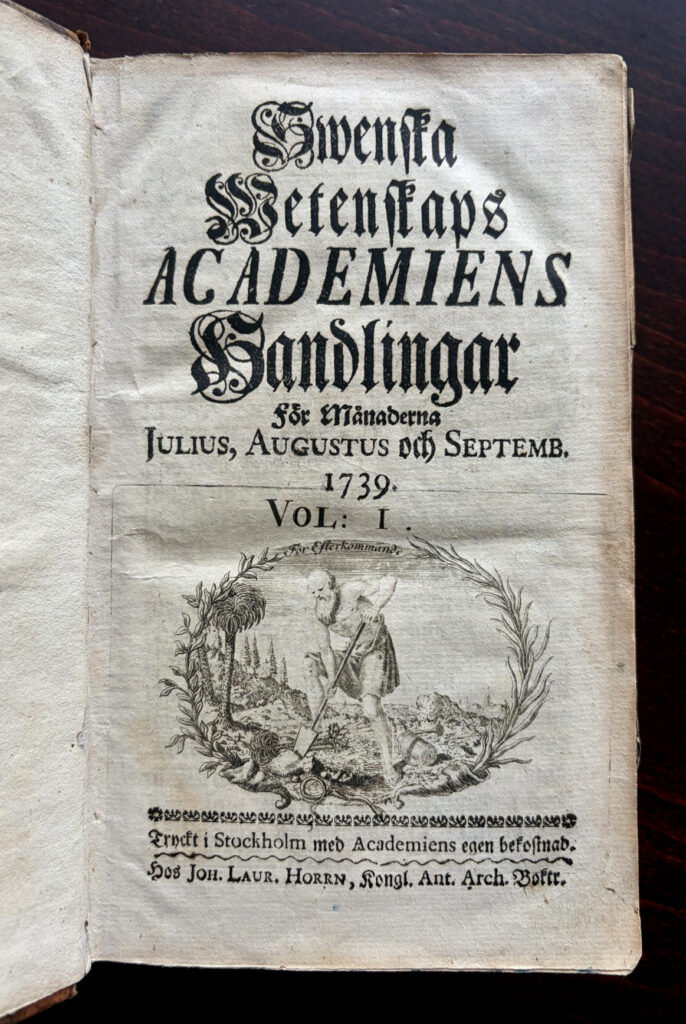
More or less immediately, the Academy began publishing the Transactions of the Royal Swedish Academy of Sciences once every three months. It had a clear focus on spreading what was often very practical knowledge and experience to the populace. The idea was to enable a better future, where this knowledge would benefit “future generations” as stated on the cover of the Transactions. Publication continued until 1854.
In the eighteenth century, the boundaries between different scientific disciplines, economics and trade were not as clear as they are now, and this was reflected in the members who were elected to the Academy. The objective was to gather as broad a spectrum of knowledge as possible, so there were not just scientists, but also politicians and other notable persons.
The members were divided up by their areas of interest, into what came to be called classes. Initially, there were five: astronomy, “elementa” (experimental physics, mathematics, mechanics and architecture), natural history (which included business sectors such as fishing, hunting and silkworm breeding), “artificalia” (which meant domestic economy, industry, trade and medicine), and “lingua” (the Swedish language). However, these divisions were not taken too seriously and have since been revised numerous times.
Success from the very start
The Royal Swedish Academy of Sciences was a success from the very start, not least due to the strong support provided by politicians and the royal court. The word “Royal” in the Academy’s name was hugely significant for its status, and it was regarded as a representative for and symbol of that era’s new natural science. It was perceived as both progressive and innovative because it had such a clear focus on research – the acquisition of new knowledge, rather than the teaching of old doctrines.
Three areas of activity
In its early years, the Academy’s activities were mainly collective, with members coming together for meetings, lectures and the publication of writings. However, it did not take long for members to begin conducting their own research, particularly in astronomy, which was a fashionable science. That the astronomer Pehr Wilhelm Wargentin was Permanent Secretary for more than thirty years (1749–1783) was certainly important for this development. He was responsible for starting the Academy’s own research, as well as initiating international collaboration with other academies.
Members held frequent and regular meetings – once or twice a week at first. They gave lectures, had discussions and shared their latest findings, which also resulted in a considerable number of texts. The first publication series consisted of the new members’ inaugural speeches. The second series brought together the lectures given by the chairmen, the presides, at the end of their term of office. The third series included eulogies for deceased members. These texts have been preserved and are now important historical sources, because they have provided a good understanding of the subjects and scientific matters that were then in focus.
Starting in 1746, the Academy organised weekly public lectures at the House of Nobility for the purpose of disseminating knowledge. From the Academy’s founding, Swedish was the language that was used, not Latin (which had long been the language of science in Europe) or French (which was fashionable among certain circles during the eighteenth century). The members also set aside their formal titles in the context of the Academy. The tradition of referring to members as Mr or Mrs followed by their surname continues to this day.
The almanac: a goldmine
In 1747, the Royal Swedish Academy of Sciences was granted a privilege (a type of monopoly) for the publication of Swedish almanacs, due to its astronomical and scientific expertise. The almanacs included sermons, the signs of the zodiac, the positions of the sun, moon and planets, information about market days and postal services, and weather forecasts. However, the Academy also put its own stamp on them by adding an essay at the end, for the public’s education. This was usually related to agriculture or medicine – knowledge that was thought to be of benefit to the population. Before the government rescinded the privilege in 1972, the Academy had benefitted from it for 225 years, providing its activities with a stable financial foundation.
Sweden switched from the Julian calendar to the Gregorian calendar fairly soon after the almanac began to be published. The Julian calendar did not correspond to the solar year, which resulted in problematic time discrepancies that needed correcting on a regular basis. From 1753, the modern Gregorian calendar, which had already been adopted elsewhere in Europe, also applied in Sweden.
The Academy gets its own observatory
The Academy’s focus on astronomy was not only evident from the almanac and the introduction of a new calendar; solar eclipses and transits of Venus aroused great interest in this new and exciting science. The major foreign academies had their own observatories, and the Royal Swedish Academy of Sciences did not want to fall behind. The new observatory was completed in September 1753. It stood on Brunkebergsåsen, which was then on the outskirts of Stockholm. The two transits of Venus in 1761 and 1769 were public occurrences. People from every social class gathered at the observatory to watch Venus pass in front of the sun.
The end of the first golden age
The Academy enjoyed great success over the first three or four decades of its existence, which was a period when Swedish science led the world in several areas. There was great enthusiasm for the sciences, and the Academy was a natural meeting place. However, by the end of the century there were signs that its first golden age was approaching its end. The natural sciences’ popularity declined, as did the Academy’s. The reign of Gustav III set a new agenda for Sweden. The new king was more interested in art, music and theatre than in science. During the Gustavian era, the elite regarded the natural sciences as dull, pedantic and humourless. They no longer represented anything new, with many people regarding them as old-fashioned – they were even mocked by some among the cultural elite.
Wargentin’s death in 1783 marked the definitive end of the Academy’s first golden age. By the end of the 1780s, many of the other great Swedish naturalists had also passed away, including Carl Linnaeus, Torbern Bergman, Johan Gottschalk Wallerius and Carl Wilhelm Scheele. Other prominent names, such as Anders Celsius and Samuel Klingenstierna, had died long ago.
A new spirit emerged in the nineteenth century
The Gustavian era gave way to the emerging Romantic movement, which also preferred art to science. The Romantics emphasised emotion and empathy and criticised the limitations of rational thought. The spirit of the Romantic era was a stark contrast to the rational ideals and the scientific view of the world that was the basis for the Academy’s work. The Romantics were interested in nature, although not as something to be studied scientifically, rather as something to be experienced and become immersed in.
A second golden age with Berzelius at the helm
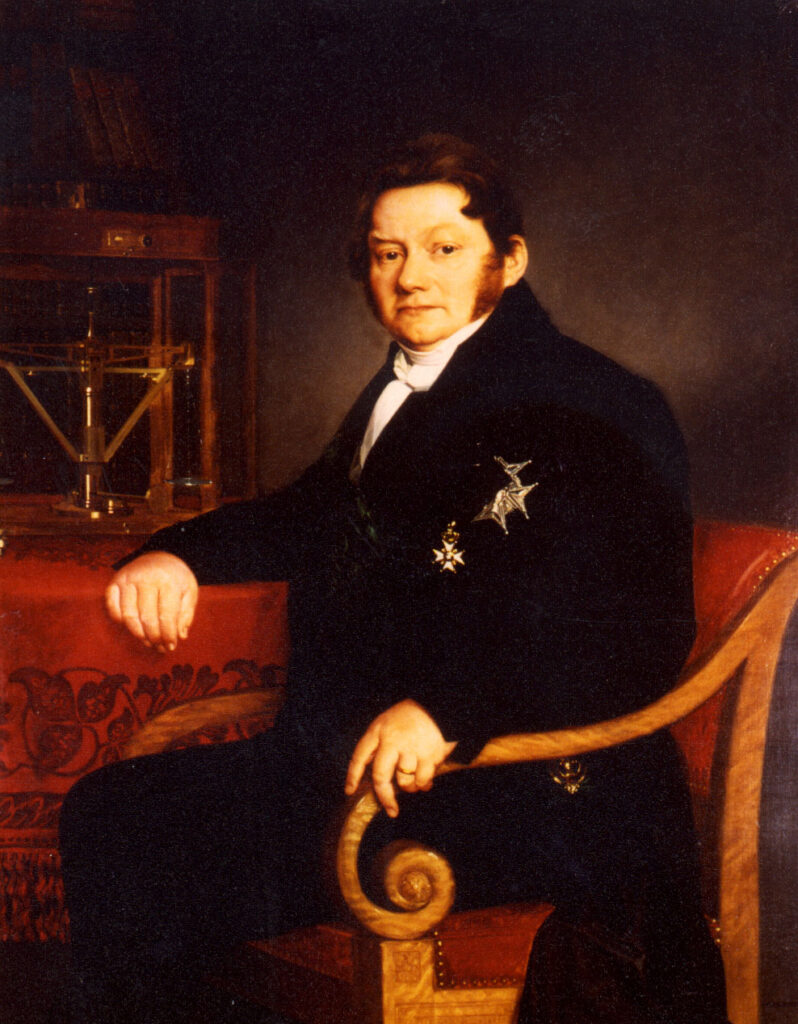
After Wargentin’s death, the Academy entered a period of stagnation, in terms of both quality and quantity. Permanent secretaries came and went, but left no significant mark. The Academy did not get a new lease of life until the 1820s, when the appointment of world-renowned chemist Jacob Berzelius as Permanent Secretary ignited a new golden age.
Berzelius often criticised the Romantic philosophy of nature. He always looked to the best interests of science, and the Academy benefited greatly from his organisational skills and enormous capacity for work. He was also a fine writer, which helped get him elected to the Swedish Academy as well.
As the Academy’s new Permanent Secretary, he immediately commenced its reorganisation. This included two occasions on which he changed how the members were divided into classes, so they better reflected the contemporary view of the sciences. In 1820, the Academy had nine classes. This system, which was to last well into the 20th century, now corresponded more closely to the subject-based structure used at universities.
In 1821, Berzelius also introduced an annual commemorative day which is still celebrated on 31 March (the date the Academy was granted royal status in 1741). He also ensured that the Academy began to publish annual reports. In these, as the accomplished writer he was, he described the scientific progress made over the past year. These annual reports were published between 1821 and 1847, were translated into various languages and were widely read throughout Europe.
Thanks to Berzelius, the status of the Royal Swedish Academy of Sciences dramatically improved. During this period, other successful Swedish scientists also made important contributions, including Carl Adolph Agardh, Elias Fries, Sven Nilsson and Anders Ångström.
Stockholm’s scientific stronghold
Throughout the nineteenth century, the Royal Swedish Academy of Sciences was involved in virtually all scientific activities in Stockholm. As it took a long time for a university to be established in the capital, the Academy was instead the stronghold of the natural sciences. Intensive scientific research was also conducted at several of the Academy’s institutes.
The Swedish Museum of Natural History was established thanks to the Academy’s vast collection of donated natural history specimens, which needed to be properly housed. The museum expanded significantly over the century, thanks to the numerous expeditions in which Swedish researchers participated. The polar explorer Adolf Nordenskiöld was its curator and professor. In 1861, he also became a member of the Academy. The aims of all the expeditions that he and others participated in were to make observations, and to describe and collect plants, animals, fossils and rocks. A great deal of this material ended up at the Museum of Natural History, which remained under the Academy’s control until 1965.
The Academy also played an important role in the development of modern meteorology in Sweden, ensuring that regular meteorological observations were made across the country and reported to them. The number of weather stations increased dramatically: from 40 in 1873 to 450 in 1890.
Nordenskiöld was one of the most famous and admired scientists of the nineteenth century, with some of the glory that surrounded his internationally acclaimed polar expeditions in the latter half of the century also being reflected on the Academy. In many ways, Nordenskiöld epitomised the public’s view of the scientist during that period. He was regarded as a hero, a bold and intrepid explorer.
A city of science was built in the twentieth century
Stockholm gained a university college in 1878 and, as it grew stronger in the early twentieth century, the Royal Swedish Academy of Sciences’ position as a research institution began to change. Many of its members contributed to the new university’s establishment, including the mathematician Gösta Mittag-Leffler. Several of the Academy’s institutes were incorporated into Stockholm University College. Still, the Academy remained the centre of scientific debates and new scientific initiatives. For example, the Academy was an early promoter of nature conservation and contributed to the founding of Swedish national parks.
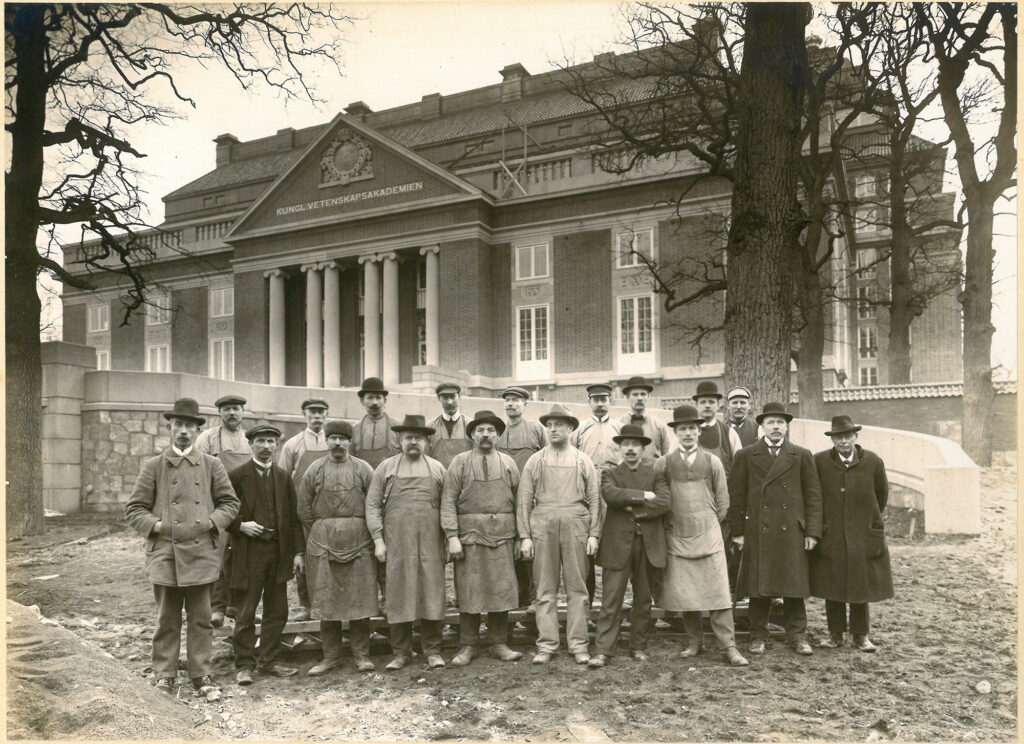
In 1915, the Academy moved into its current premises in Frescati, on the north of Djurgården. The following year, the new Museum of Natural History, located nearby, was completed. It had previously been housed in the Academy’s premises, but these had become increasingly cramped as the collections expanded. Several other scientific institutions were located close to the Academy and the Swedish Museum of Natural History, leading to the area becoming known as ‘Science City’. Eventually, Stockholm University also began relocating its main activities to the Frescati area. The university college had been granted full university status in 1960.
Stepping into the spotlight with Nobel
The modern history of the Royal Swedish Academy of Sciences is closely linked to the Nobel Prizes in Chemistry and Physics, for which the Academy has selected laureates since 1901. Since 1969, the Academy has also awarded the Sveriges Riksbank Prize in Economic Sciences in Memory of Alfred Nobel. The work involved in selecting Nobel laureates and laureates in economic sciences has, in many ways, spurred the Academy onwards and raised its international standing. Thanks to the prizes’ enormous media impact, the organisation has entered the global spotlight in an entirely new way, with many people now primarily associating the Academy with the awarding of the Nobel Prizes. In early October, in keeping with tradition, the laureates in physics, chemistry and economic sciences are announced in the Session Hall at the Royal Swedish Academy of Sciences.
A new phase, but continued independence
When the Academy lost its almanac privilege in 1972, it was forced to look for other sources of income. As compensation, the Academy received an annual grant from the state, in addition to the donations and funds it had always received from various sources. However, this public funding does not mean that the Academy has lost its autonomy, it remains an independent institution.
To stay in step with societal trends, the Academy has implemented numerous changes in recent decades. Female members were long conspicuous by their absence from the Academy; Eva Ekebladh was indeed elected as a member back in 1748, but she never attended any meetings. The statutes from 1820 stipulated that members must be men, although this was amended in 1904. In the first half of the twentieth century, the Academy elected a number of prominent women as foreign members, including Marie Curie and Lise Meitner (the latter was transferred to Swedish membership after a few years). However, it was really only from 1975 that women began to be elected as Swedish members of the Academy. They gradually also came to hold more prominent positions, and in 1994 the Academy appointed its first female president (chair), the astrophysicist Kerstin Fredga.
In 1973, a new rule was introduced that automatically led to the election of a new member when an existing member turned 65. The Academy had been suffering from an imbalanced age distribution among the members, and the rule aimed was to counteract this. In 2006, a change was entered in the statutes to stipulate that the need for gender equality may be considered in the selection process, although academic qualifications always take precedence.
In the 1970s, the Academy also began to adopt a more outward-looking approach. The once completely private meetings held on the second and fourth Wednesdays of each month were split into two sessions, and the public were granted access to the second: a lecture followed by a discussion.
A couple of minor changes were made to Academy’s classes in the twentieth century, with the division of the members into ten classes adopted in the latter half of the century. This remains the case. Two new institutes were founded: the Beijer Institute of Ecological Economics (1977) and the Center for History of Science (1988).
The twenty-first century: a new era
During the 2000s, the Royal Swedish Academy of Sciences transferred several institutes to other organisations: the Kristineberg Marine Research Station, the Abisko Scientific Research Station and the Institute for Solar Physics. Stockholm’s old observatory, which had been a museum for a while, was sold to the City of Stockholm. Operations at the Bergius Botanic Garden were transferred to Stockholm University, and the Bergianus professorship – where the holder had previously also served as the garden’s director – was converted into a purely research professorship. However, the Academy also launched new initiatives in the environment and sustainability through a new research programme, the Anthropocene Laboratory.
In many ways, the Academy has recently returned to the original purpose of its work: disseminating knowledge to the public. Efforts have been made to organise Academy lectures in Swedish with a popular science basis, and the Vetenskapen säger (Science Says) publication series describes new research findings for school pupils. Many of the lectures, symposia and seminars held at the Academy are filmed and made publicly available. For the past few years, information about activities has also been shared on social media.
The permanent committees consider important issues, including raising matters with decision-makers. In the wake of the pandemic, a Health Committee was added to the Research Policy Committee, the Environment and Energy Committee, the Education Committee and the International Committee.
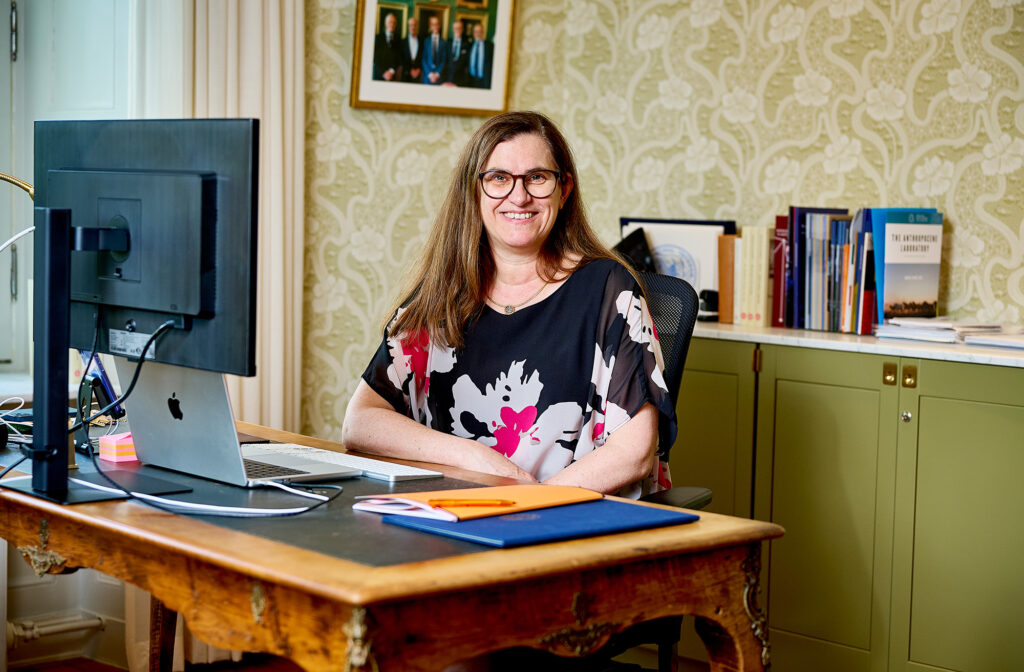
In early 2026, the Academy‘s first female Permanent Secretary, now titled the Secretary General, was appointed – the physicist Ellen Moons.
Center for History of Science
The Center for History of Science was established in 1988 and is one of the Academy’s research institutes. The Center shall promote history of science research, particularly based on the rich collections of archives and scientific instruments. The premises and collections are located at the Academy’s main building in Stockholm.