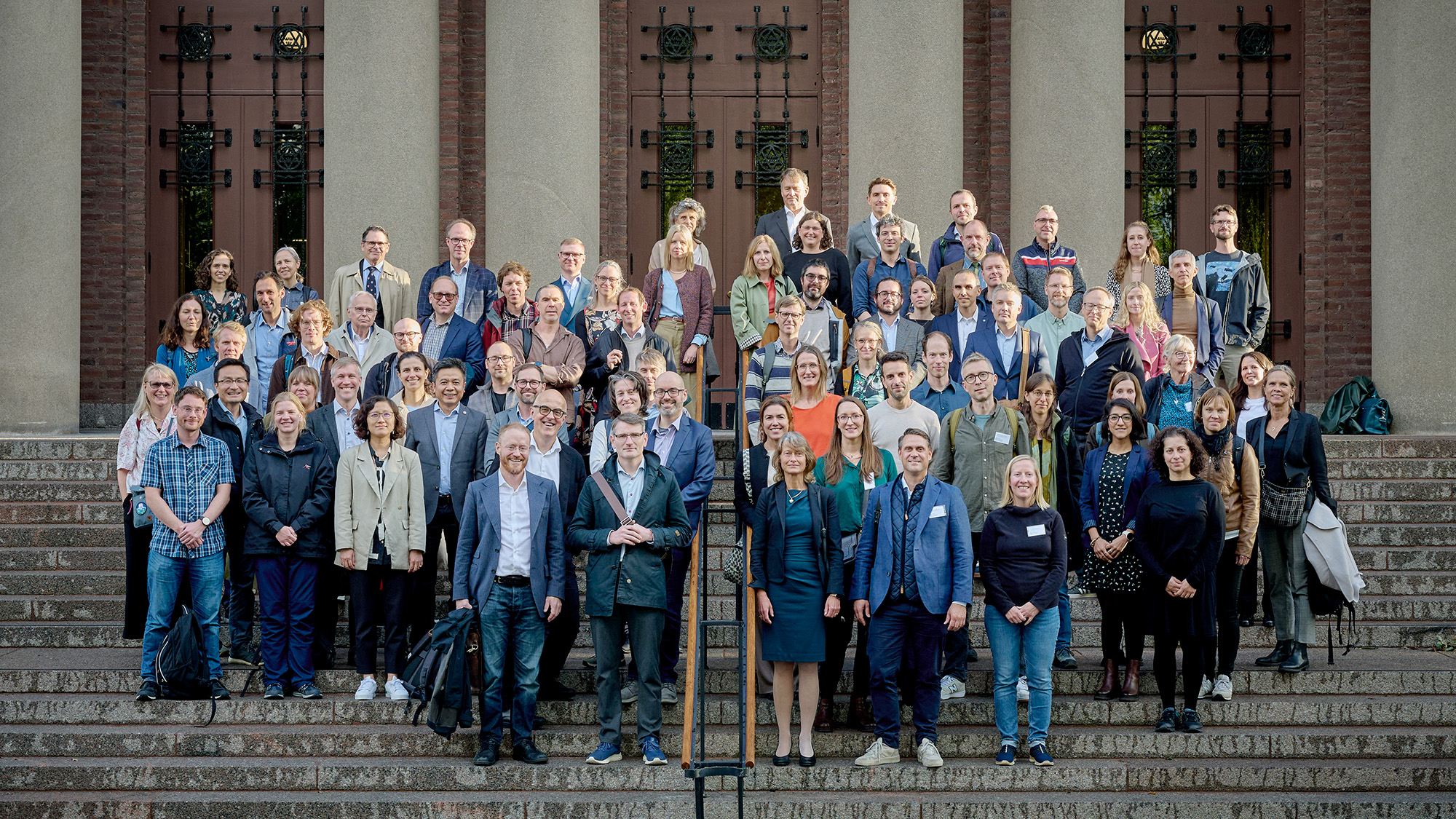
Another 27 promising researchers will now receive five-year basic research grants from Knut and Alice Wallenberg Foundation. This funding provides researchers in the beginning of their careers with the opportunity to contribute groundbreaking new knowledge by tackling long-term and difficult research questions.
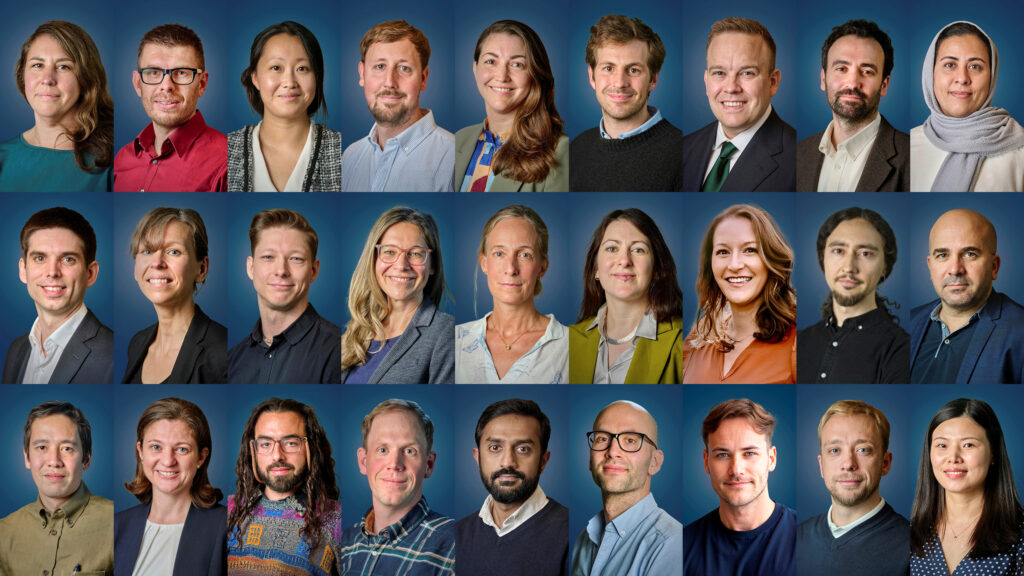
This year’s Wallenberg Academy Fellows will be tackling innovative research questions. Among them are Enric Llorens Bobadilla at Karolinska Institutet, who wants to discover how spiny mice are able to repair their own nerve cells. Haim Treves, Uppsala University, is studying whether food production can be increased by making photosynthesis more efficient. At the University of Gothenburg, Kristen Kao is researching how a country can best heal the wounds of civil war, so that conflicts do not flare up again, and Ilaria Torre, Chalmers University of Technology, wants to improve robots’ communication skills so that humans can understand them more easily.
Few researchers have left Sweden
“The program is both long-term and highly attractive. One clear indicator of its success is that very few researchers have chosen to leave the program for careers outside Sweden. Its primary aim has been to retain talented Swedish researchers while attracting international talent, providing them with the time and resources needed to tackle complex research questions over the long term,” says Peter Wallenberg Jr, Chair of Knut and Alice Wallenberg Foundation.
Members of the Royal Swedish Academy of Sciences assist the foundation by reviewing the applications and helping with the selection process. The Academy also manages the mentorship program in which the selected researchers can participate.
“Our members really put their heart and soul into finding the researchers with the greatest potential. The mentorship program also allows us to support them in their continued careers and provide them with the best opportunities for success,” says Hans Ellegren, Secretary General of the Royal Swedish Academy of Sciences.
288 researchers since 2012
In total, 288 researchers have been appointed Wallenberg Academy Fellows since 2012. All were in the beginning of their careers when the grant was awarded and their applications all underwent rigorous evaluation by a large number of international evaluators. Including this year’s round, so far Knut and Alice Wallenberg Foundation has allocated just over SEK 3.2 billion to the program.
The funding covers research in natural sciences, medicine, engineering and technology, humanities, and social sciences. It was established in 2012, in partnership with the royal academies and 16 Swedish universities. An additional five years of funding may be applied for after the end of the first period.
2025’s Wallenberg Academy Fellows
(Where the nominating university is not the researcher’s current university, the nominating university’s name is in parentheses.)
Natural Sciences
- Dr Haim Treves, RPTU University Kaiserslautern-Landau, Kaiserslautern-Landau, Germany (Uppsala University)
- Dr Andreas Kohler, Umeå University
- Dr Elisabeth Gruber, University of Innsbruck, Austria (Stockholm University)
- Dr Aron Wennman, KU Leuven, Belgium (KTH Royal Institute of Technology)
- Dr Markus Ludwig, University of Luxembourg, Luxembourg (Umeå University)
- Dr Shantanu Mishra, IBM Research Europe, Zurich, Switzerland (Chalmers University of Technology)
- Dr Simon Leo Rydin Myerson, University of Warwick, United Kingdom (Chalmers University of Technology)
- Dr Maliheh Mehrshad, Swedish University of Agricultural Sciences
- Dr Nils Engelsen, Chalmers University of Technology
Medicine
- Dr Axel Hyrenius Wittsten, Lund University
- Dr Max Renner, Umeå University
- Dr Camilla Engblom, Karolinska Institutet
- Professor Charlotte Thålin, Karolinska Institutet
- Dr Enric Llorens Bobadilla, Karolinska Institutet
- Dr Amanda Andersson Rolf, Hubrecht Institute, Utrecht, the Netherlands (Karolinska Institutet)
Engineering and Technology
- Dr Helena Lundberg, KTH Royal Institute of Technology
- Dr Zheng Chen, Linköping University
- Dr Jendrik Seipp, Linköping University
- Dr Ilaria Torre, Chalmers University of Technology
- Dr Alexandra Stubelius, Chalmers University of Technology
Humanities
- Dr Mandy Tröger, University of Tübingen, Germany (Södertörn University)
- Dr James Nguyen, Stockholm University
- Dr Martin Andersson, Swedish University of Agricultural Sciences
Social Sciences
- Dr Kristen Kao, University of Gothenburg
- Dr Pol Campos-Mercade, Lund University
- Dr Stuart Turnbull-Dugarte, University of Southampton, United Kingdom (Uppsala University)
- Dr Rafael Ahlskog, Uppsala University
Presentations of each researcher’s work are available at:
https://kaw.wallenberg.org/wallenberg-academy-fellows-2025
Press photos
https://mediabank.wallenberg.org/search/bilder
Contact
Peter Wallenberg Jr, Chair, Knut and Alice Wallenberg Foundation,
+46 (0)8 545 017 80
kaw@kaw.se
Sara Mazur, Executive Director, Knut and Alice Wallenberg Foundation,
+46 (0)8 545 017 80
kaw@kaw.se
Hans Ellegren, Secretary General, Royal Swedish Academy of Sciences
+46 (0)8 673 9503
hans.ellegren@kva.se
Eva Nevelius, Press Secretary, Royal Swedish Academy of Sciences
+46 (0)70 878 6763
eva.nevelius@kva.se
Background
The program, funded by Knut and Alice Wallenberg Foundation, has been established in close cooperation with the Royal Swedish Academy of Sciences, the Royal Swedish Academy of Engineering Sciences, the Royal Swedish Academy of Agriculture and Forestry, the Royal Swedish Academy of Letters, History and Antiquities, the Swedish Academy and Swedish universities. The universities nominate researchers to the program, the academies evaluate the candidates and present the most promising researchers for the Foundation, which then makes the final selection. Since the program started in 2012, Knut and Alice Wallenberg Foundation has invested a total of just over SEK 3.2 billion in the program.